

Financial Disclaimer: The strategic analysis from the Finanlytic Data Intelligence Unit is meant for informational and educational purposes only. Content created by Hugo Cutillas or other contributors shouldn’t be taken as professional investment, financial, tax, or legal advice. Trading in fast-paced markets carries a significant risk of losing capital. Finanlytic is not a registered financial advisor or broker-dealer. We analyze complex data signals, but remember, just because something worked in the past doesn’t guarantee it will work in the future. Always do your own research and consult with a certified financial professional before making any market moves.
Inflation isn’t just a number that pops up in monthly government reports; it’s a sneaky, powerful force that quietly eats away at your savings long before the official figures come out. Most people only start to notice when they’re hit with a higher grocery bill or a rent increase, but the savvy investors, the “Smart Money”, have already made their moves. In the intricate economy of 2026, being able to read the subtle signs that hint at rising inflation can give you a significant advantage. It helps you safeguard your buying power and reposition your investments while others are still scratching their heads, wondering where their savings went.

DATA INTELLIGENCE UNIT: INFLATION LEAD TIMES
| Indicator Signal | Economic Impact Area | Warning Lead Time |
| Wage-Productivity Gap | Service Sector & Logistics | 3 – 6 Months |
| Commodity Bottlenecks | Tech, Auto & Construction | 2 – 4 Months |
| Energy Spikes (Master) | Everything (Transport/Mfg) | 1 – 2 Months |
| Currency Weakness | Imports & Digital Services | Immediate |
The Wage-Productivity Gap: Your Future Service Costs
One of the earliest signs of inflation that often gets overlooked is how wage growth compares to productivity. When wages start to rise in an industry, not because workers are producing more, but due to a labor shortage, companies find themselves in a tough spot. To keep their profit margins intact, they end up passing those higher labor costs straight to you. So, keep an eye on employment reports and labor participation rates. If you notice “Average Hourly Earnings” steadily increasing in service sectors like hospitality or logistics without a corresponding boost in efficiency, brace yourself for a jump in the cost of your everyday life, from dining out to those last-mile deliveries, in the upcoming quarter.
Supply Chain Bottlenecks and the Bullwhip Effect
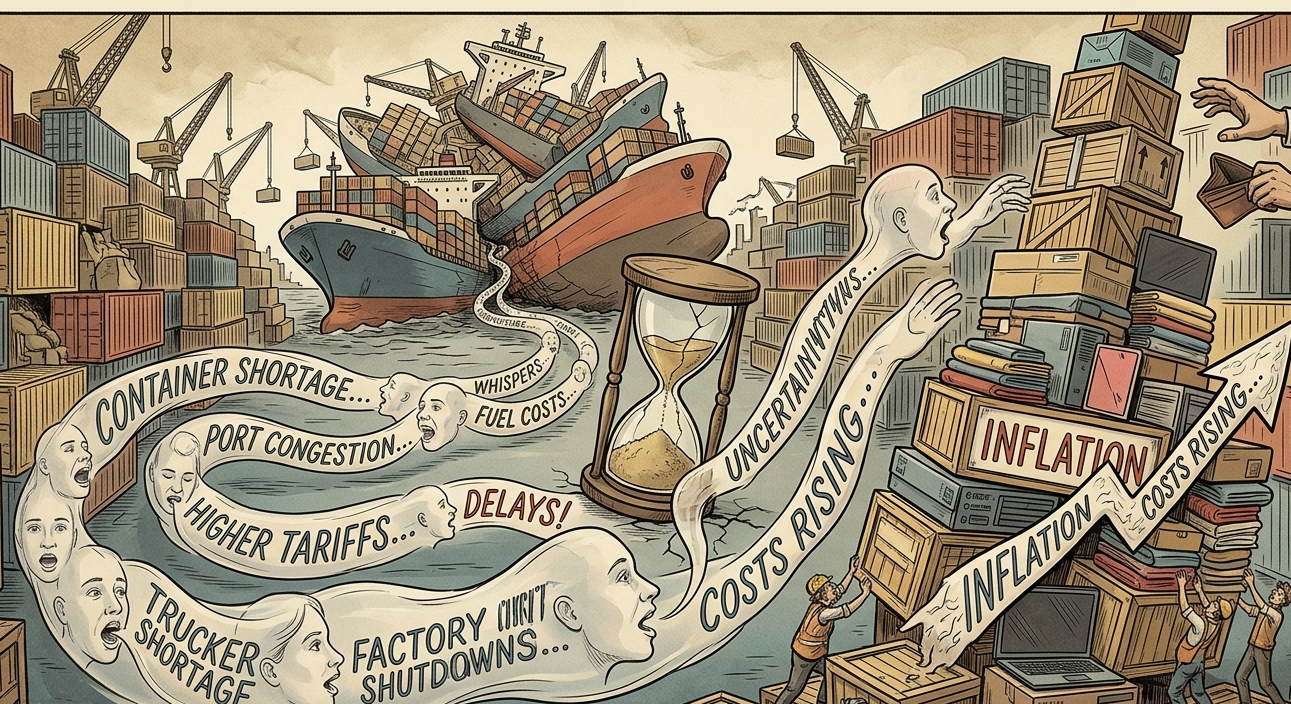
Inflation often creeps in quietly, lurking in the shadows of global logistics. When there’s a shortage of a specific raw material, like neon for semiconductors or cobalt for batteries, it might not grab headlines right away, but it sets off a “bullwhip effect” that eventually hits consumers hard. Keeping an eye on wholesale commodity prices is crucial; if you notice lumber or steel prices climbing today, you can bet your contractor’s estimate or the cost of a new car will jump by 20% in just a few months. By catching these early warning signs, you can brace yourself for price hikes before they become the new normal at retail.
Energy: The Master Input
Energy is often seen as the “Master Signal” that many people overlook until they find themselves at the gas station. Since energy is essential for producing and transporting nearly everything we use, rising prices for oil, gas, or electricity can feel like an invisible tax on the whole economy. By keeping an eye on weekly energy rates, you can get a glimpse into your future living costs. When transport expenses go up, you’ll notice a quick spike in grocery prices, and as cooling costs for data centers rise, you can expect to see an increase in your digital subscriptions and tech gadgets, too. Energy is the thread that ties it all together; when it shifts, everything else tends to follow suit.
Currency Weakness and Imported Inflation
In the interconnected economy of 2026, the strength of your local currency serves as a clear indicator of inflation. When your currency weakens, everything you import, whether it’s the latest smartphone or crucial manufacturing parts, becomes pricier, no matter what’s happening at home. Savvy investors who keep an eye on foreign exchange (FX) trends can spot inflationary pressures that might not yet be reflected in local price indexes. If your currency is slipping against key trading partners, brace yourself: your cost of living is likely to rise. This phenomenon, known as “imported inflation,” quietly erodes your purchasing power long before the central bank even acknowledges it.
Asset Prices as a “Pre-Alarm”
Inflation can really shake up financial markets before it starts to hit your wallet. When big institutional investors get a whiff that inflation might be on the rise, they tend to ditch cash and dive into “real assets.” That’s your cue to pay attention. A noticeable spike in ETFs that focus on commodities or gold usually signals that the “Big Money” is preparing for a potential price hike. Likewise, if you notice some unusual activity in speculative sectors, that could be a red flag. As we’ve pointed out in our Smart Money footprints reports, sudden waves of liquidity often hint at a larger market shift on the horizon. When speculative assets start to surge, it’s typically a sign that there’s too much cash chasing too few goods, a classic warning sign of an impending inflationary wave.
To understand how energy and currency cycles interact to devalue your savings, we recommend this breakdown on ‘Imported Inflation
Practical Steps: Defensive Capital Management
Recognizing these signals is only beneficial if you have the discipline to act before the opportunity slips away. In the fast-paced world of 2026, being proactive with your finances is your best defense against losing purchasing power.
Adjust Your Budget Early: Keep an eye on supply chain disruptions as they occur. By locking in essential purchases like appliances or travel plans now, you can avoid being caught off guard by sudden price hikes.
Invest in “Hard” Assets: Consider reallocating part of your portfolio into commodities, real estate, or inflation-protected bonds like TIPS to give your wealth a solid foundation.
Hedge Your Currency: If your local currency starts to falter, diversifying into stable foreign assets or “Digital Gold” (like Bitcoin) can act as a crucial decentralized safeguard.
Audit Your Subscriptions: Cut out the “service creep” that hides rising costs in digital services, making sure those sneaky price increases don’t eat into your investable capital.
Finanlytic Conclusion
FINANLYTIC | DATA INTELLIGENCE UNIT | Analysis by Hugo | Lead Market Strategist
Inflation isn’t just a number you see in reports; it’s like a sneaky thief lurking in the background of our economy. By keeping an eye on wages, supply chains, energy prices, and currency trends, you can shift from being a passive victim of these economic forces to becoming a savvy strategist. In this fast-paced world, the best way to foresee the future costs of your life is to tune into the signals that are unfolding right now. Don’t wait for the headlines to inform you that your wallet is feeling lighter. Pay attention to the signs. Safeguard your future.