

Financial Disclaimer: The strategic analysis from the Finanlytic Data Intelligence Unit is meant for informational and educational purposes only. Content created by Hugo Cutillas or other contributors shouldn’t be taken as professional investment, financial, tax, or legal advice. Trading in fast-paced markets carries a significant risk of losing capital. Finanlytic is not a registered financial advisor or broker-dealer. We analyze complex data signals, but remember, just because something worked in the past doesn’t guarantee it will work in the future. Always do your own research and consult with a certified financial professional before making any market moves.
As gold breaks through the $5,000 per ounce mark in the first quarter of 2026, savvy investors are now pondering not “if” they should invest, but “how” to do it. While many are flocking to the ease of digital gold alternatives, seasoned professionals need to face a harsh truth: not all gold is the same. In a time marked by systemic shifts and persistent inflation, choosing between holding physical gold and opting for a Gold ETF goes beyond mere convenience, it’s about choosing genuine control over a digital mirage.
At Finanlytic, we keep a close eye on the troubling separation of “paper gold” from its physical counterpart. If you aim to break free from the financial constraints we discussed in The Salary Illusion, buying a Gold ETF is akin to trying to escape a prison through a door that’s just a painting on the wall.
The Illusion of Liquidity
Gold Exchange-Traded Funds (ETFs) like GLD or IAUM are often touted as the “modern” way to invest in gold. They promise quick access to your money and eliminate the hassle of storage. But for the Sovereign Investor of 2026, relying on these instruments could be a significant misstep. When you purchase an ETF, you’re not actually buying gold. Instead, you’re acquiring a digital claim on a small portion of gold that’s stored in a bank’s vault. Essentially, you’re putting your “safe haven” in the hands of the very banking system you’re trying to protect yourself from. In the event of a systemic crisis, the exact situation gold is meant to safeguard against, these digital entries can be affected by the same “Bail-in” rules and platform freezes that apply to your savings account. By opting for an ETF, you’ve swapped the ultimate refuge for just a password and a promise from a middleman.
Physical Gold: The Fortress of Zero Counterparty Risk
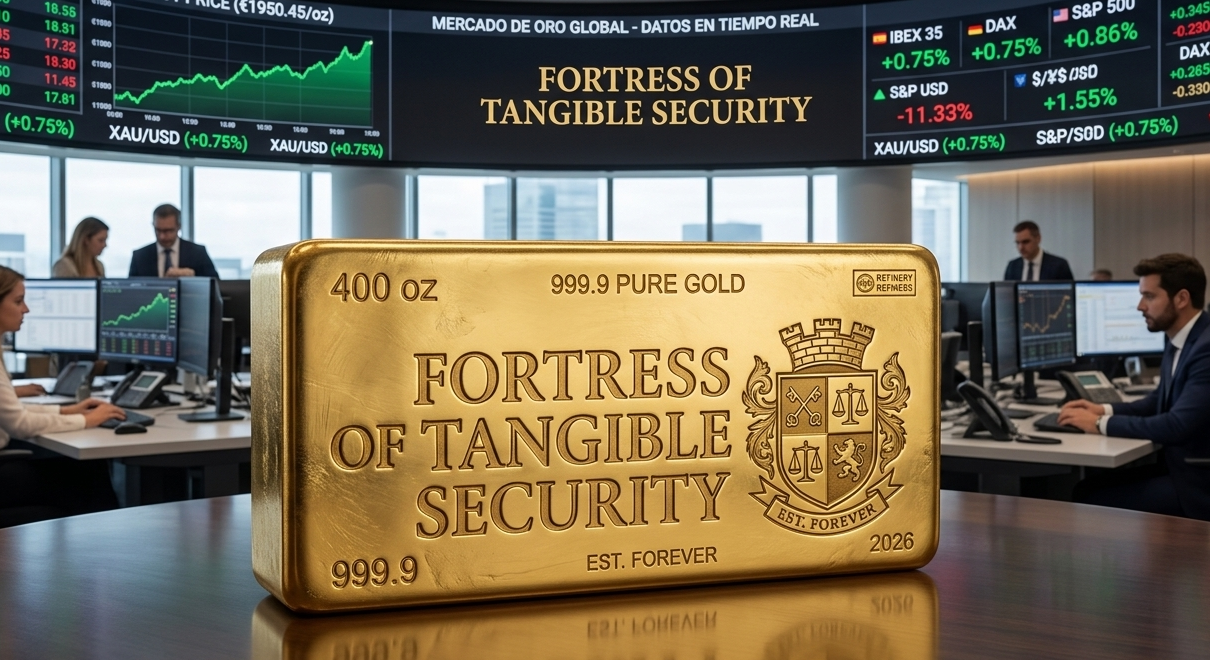
Physical gold is unique in the financial world because it’s not tied to anyone else’s debt. It represents the truest form of wealth ownership, offering what we call Zero Counterparty Risk. In a world where everything is monitored and tracked, physical bullion, whether it’s sovereign coins, minted bars, or private vault holdings, acts as a universal currency that doesn’t need a bank’s approval to exist or retain its value. It serves as the “Off-Switch” for the digital surveillance state. While the hidden theft of currency debasement chips away at our salaries and “paper” investments, physical gold remains a steadfast protector of our purchasing power. It’s the only asset that isn’t dependent on any jurisdiction.
To truly get a grip on the gold market in 2026, it’s essential to dive into the inner workings of various ownership models. At Finanlytic, we make it clear that not all gold is the same. This technical overview sheds light on the counterparty risks that come with ETFs and highlights why physical bullion stands out as the only asset free from jurisdictional concerns.
The Paper Gold Manipulation
The Finanlytic Data Intelligence Unit has uncovered a significant structural issue in the 2026 markets: the Paper-to-Physical Decoupling. For every ounce of real gold securely stored in a vault, there are estimated to be over 500 ounces of “paper gold” being traded on global exchanges. This situation exemplifies Market Manipulation. Wall Street leverages these paper contracts to keep the price of gold suppressed, ensuring that the “salary class” remains focused on gains in fiat currency while Central Banks quietly ramp up their physical reserves. If just 2% of ETF holders requested physical delivery of their gold today, the entire system would be on the brink of collapse. This is what we’re calling the Custody Crisis of 2026. Remember, if you can’t hold it, you don’t truly own it; you’re just holding a PDF in a system that’s failing.

DATA INTELLIGENCE UNIT
| Feature | Physical Bullion (Sovereign) | Gold ETFs (Digital Illusion) |
| Control | Absolute (You hold the keys) | Conditional (Bank-held) |
| Systemic Risk | Zero | High (Counterparty dependency) |
| Privacy | High (Off-ledger potential) | Zero (Full digital footprint) |
| 2026 Status | The Sovereign Core | The Banking Distraction |
| Exit Strategy | Independent of Banks | Dependent on Market Access |
The Hidden Burdens Vs The Price of Freedom
Critics of physical gold often highlight the Premium Gap and the costs associated with storage. In 2026, it’s true that dealer markups for physical coins have increased. However, at Finanlytic, we see these premiums not as a “cost,” but rather as an Insurance Premium for Sovereignty. The annual management fees of an ETF, known as the “expense ratio,” can slowly chip away at your returns over time. More importantly, ETF holders face the Borrowing Barrier and capital gains taxes, which are easily monitored and enforced by automated AI tax agents. When managed properly, physical gold provides a level of financial independence that is becoming increasingly valuable in today’s controlled economy.
Strategic Integration: The Core and Satellite Approach
In 2026, savvy investors are shifting away from the old “either/or” mindset. The Finanlytic strategy incorporates physical gold as a Core Insurance Holding, making up about 10-15% of their total net worth, and is designed for those “worst-case” scenarios. But gold isn’t just sitting there collecting dust. In the 2026 landscape, we leverage technology to confirm our physical holdings and use them as Hard Money Collateral, allowing for liquidity without the need to sell the asset. This approach effectively connects the timeless security of gold with the demands of modern performance. At the same time, we recognize ETFs for what they truly are: Satellite Hedges meant for short-term trading, and they should never be confused with real wealth.
Finanlytic Takeaway

FINANLYTIC | DATA INTELLIGENCE UNIT | Analysis by Hugo | Lead Market Strategist
The choice is pretty straightforward: Would you rather enjoy the ease of being a victim or take on the responsibility of being a sovereign? Investing in a Gold ETF in 2026 is like doubling down on a banking system that’s set up to keep you trapped in the “Salary Illusion.” True wealth isn’t just a number on a brokerage screen; it’s the freedom to step away from the system while keeping your purchasing power intact. It’s time to stop settling for digital promises and flimsy “paper” claims. To navigate the Hidden Theft of 2026, you need to go back to the one asset that has stood the test of time for 5,000 years: Physical Sovereignty.