
Financial Disclaimer: The strategic analysis from the Finanlytic Data Intelligence Unit is meant for informational and educational purposes only. Content created by Hugo Cutillas or other contributors shouldn’t be taken as professional investment, financial, tax, or legal advice. Trading in fast-paced markets carries a significant risk of losing capital. Finanlytic is not a registered financial advisor or broker-dealer. We analyze complex data signals, but remember, just because something worked in the past doesn’t guarantee it will work in the future. Always do your own research and consult with a certified financial professional before making any market moves.
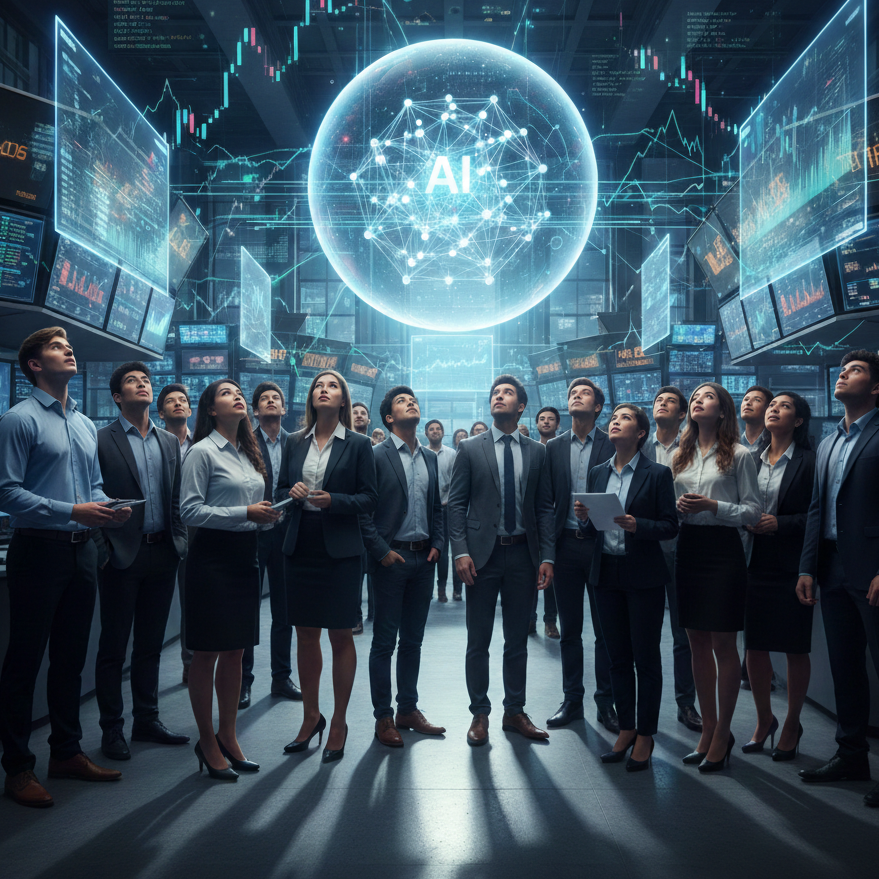
The age where algorithms have taken the reins of the global economy isn’t just a passing phase; it’s here to stay, and it’s locked the door behind it. We’ve pretty much lost our grip on how money is managed in the vast web of global finance. Because of this, financial markets are shifting at a breakneck pace, so fast, in fact, that we’ve lost any real sense of “true understanding” that comes from traditional human observation.
Right now, every crucial element of market dynamics, from when orders are placed to how quickly they’re executed, is controlled by machine intelligence. Meanwhile, most retail investors and traditional analysts are still caught up in endless debates about macroeconomic forecasts and narrative-driven stories. They’re squabbling over fairy tales while the machines are busy rewriting the very math that defines our reality.
Speed Broke the Old Model of Trading
By 2026, the financial markets will be racing at breakneck speed, and that speed brings some serious consequences. Manual trading has nearly become a thing of the past in every institutional sector. Why is that? Because price changes now occur in the blink of an eye, driven by volatility that no human can keep up with. The very idea of “liquidity”, the ability to make a transaction, has turned into a fleeting concept. Liquidity can be plentiful one moment and disappear the next, yanked away by an algorithm that picks up on a shift before a human even has time to react. The speed at which news zips through fiber optic cables and satellites is so rapid that human response time (which takes hundreds of milliseconds at best) seems almost laughable. By the time a human trader finishes reading a headline, the chance to make a profit has already been spotted, seized, and wiped out by an algorithmic system. AI didn’t just step in; it completely erased the human element from the equation.
Data Overload as the Catalyst for Automation
The modern market churns out an astonishing amount of data every single second. For us humans, this can feel like “noise”, a chaotic, overwhelming barrage of information that often leads to indecision and a sense of paralysis. But for machine learning, this same data is like a well-organized playground. AI doesn’t get bogged down; it expertly sifts through the noise to find the signal, relying on cold, hard statistics. It ignores what’s irrelevant and makes decisions based on probabilities instead of emotional judgments. Just think about the complexity: an AI can track thousands of bids and asks every second while also keeping an eye on live VIX changes, analyzing central bank statements, and conducting real-time sentiment analysis on global news feeds. In the blink of an eye, it can form a more comprehensive worldview than a human analyst could in an entire lifetime.
Execution is Where AI Dominates the Game
A lot of folks believe that AI is mainly about “predicting” what’s next, but the real magic happens in how it’s put to use. When it comes to successful trading, it’s not just about making the right calls; it’s all about how you enter and exit trades, how you size them up, and how you handle the impact on the market. If a big institution decides to scoop up a million shares all at once, it could end up pushing the market against itself. That’s where AI order automation comes into play. It breaks down that huge order into thousands of smaller, “stealthy” chunks, allowing the position to be built quietly and maximizing profits by fine-tuning the average execution cost. Trading has truly evolved from being an “artistic endeavor” into a high-stakes technical engineering challenge.
Risk Management at Machine Speed
Risk management has transformed from a weekly or daily task into a dynamic discipline that operates in real-time. AI systems now evaluate exposure across various assets, keep an eye on correlations between different classes, and anticipate “tail risks”, those rare, catastrophic events that can wipe out a portfolio in mere minutes. When the market reacts to a single news item, AI can automatically adjust the entire position. It mitigates risk before human emotions, like hope and denial, can come into play. By removing the “hero complex” from the equation, AI acts as a crucial safety net for the entire global financial system.
DATA INTELLIGENCE UNIT
| Risk Parameter | Manual Control | AI-Driven Protocols |
|---|---|---|
| Stop-Loss Lag | High (Human Delay) | Zero (Automated) |
| Asset Correlations | Occasional Checks | Real-time (24/7) |
| Emotional Bias | High (Hope/Denial) | Zero (Mathematical) |
| Crisis Management | Reactive | Proactive / Predictive |
The Interconnected Web of Global Capital
The financial markets around the globe are like a vast, interconnected web. For instance, if Japanese bond yields suddenly rise, it could lead to a sell-off in U.S. tech stocks, which in turn pulls liquidity out of major cryptocurrencies. These intricate connections often go unnoticed by someone who’s only looking at one part of the market. On the other hand, AI sees all these markets as a single, complex system. It can pick up on cross-market signals in the blink of an eye. It reacts to the internal dynamics of the system long before the average investor even catches on to what’s happening. In a world where everything is linked, the one who can see the entire landscape is the one who comes out on top.
Why Humans Still Provide the North Star
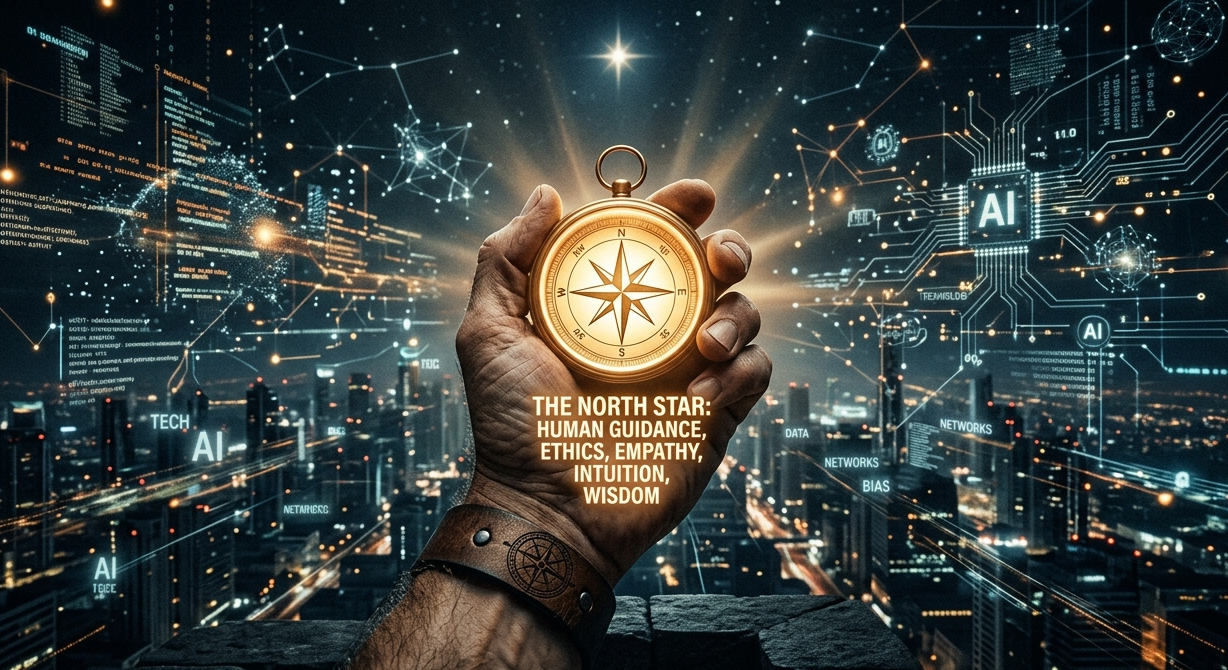
The machines might take charge of the execution, but every structure needs a visionary behind it; that’s where humans come in. While machines tackle the technical aspects, it’s up to us to set the objectives, outline the goals, determine acceptable risk levels, and draw the ethical boundaries. By 2026, the most formidable force in finance will be the collaboration between human determination and machine precision. It’s all about human intent, executed with algorithmic accuracy.
AI as the New Basic Infrastructure
These days, using AI isn’t just a “competitive edge”; it’s become the norm. Trying to trade or manage capital with only manual methods in this fast-paced environment is like attempting to win an F1 race on a bicycle. It’s not just tough; it’s practically a recipe for disaster. No one even questions whether a company is using AI anymore; it’s simply expected. That’s the baseline assumption now. If you’re not leveraging these technologies, you’re not even in the running.
Finanlytic Takeaway
FINANLYTIC | DATA INTELLIGENCE UNIT | Analysis by Hugo | Lead Market Strategist
In today’s fast-paced world, we need a level of speed and discipline that humans just can’t keep up with. That’s where AI steps in to take on the heavy lifting of decision-making. The real question isn’t whether AI should be in charge of decisions, but rather how well your strategy fits into this machine-driven environment.
At Finanlytic, we focus on blending human strategy with machine execution. To thrive in 2026, it’s not enough to just have a brilliant idea; you need a system that can turn that idea into action before the chance slips away. The future will be shaped by those who can guide the machines, not those who merely try to keep pace with them.