
Financial Disclaimer: The strategic analysis from the Finanlytic Data Intelligence Unit is meant for informational and educational purposes only. Content created by Hugo Cutillas or other contributors shouldn’t be taken as professional investment, financial, tax, or legal advice. Trading in fast-paced markets carries a significant risk of losing capital. Finanlytic is not a registered financial advisor or broker-dealer. We analyze complex data signals, but remember, just because something worked in the past doesn’t guarantee it will work in the future. Always do your own research and consult with a certified financial professional before making any market moves.
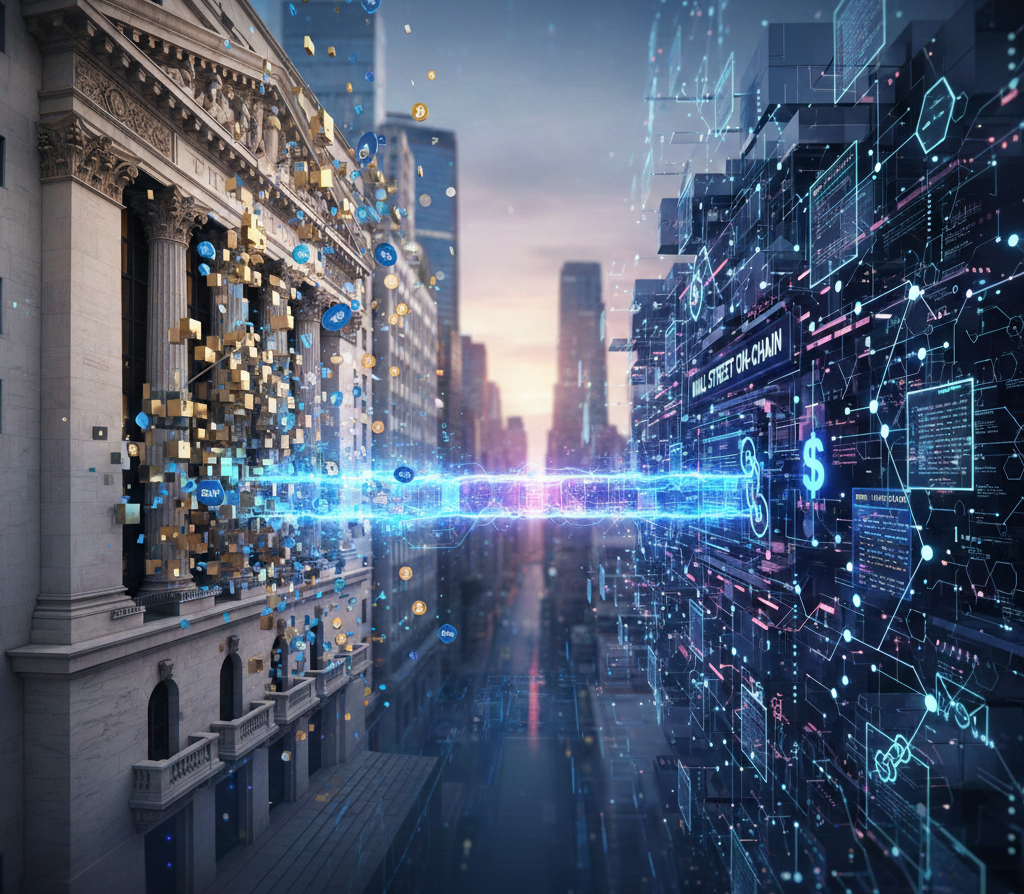
For more than ten years, blockchain technology and traditional finance have been like oil and water, often clashing and rarely mixing. Crypto was seen as this wild, speculative playground, while Wall Street stood firm with its old-school systems, manual clearinghouses, and those slow T+2 settlement times. But as we step into the first quarter of 2026, that long-standing divide is starting to fade away. We’re on the brink of a major transformation in how global wealth is owned, traded, and transferred.
Smart Contracts as the New Back-End
At its essence, tokenization is all about transforming the ownership rights of a Real-World Asset (RWA) into a digital token that lives on a decentralized ledger. These tokens are more than just simple digital records; they act as programmable claims on the actual value behind them. By bringing assets onto the blockchain, organizations create a Single Source of Truth that’s accessible in real-time for auditors and participants alike. This approach cuts through the tangled mess of custodians and paperwork that has historically bogged down global trade. By 2026, blockchain technology will have evolved into a lightning-fast back-end system, enabling assets to move as swiftly as digital data.

DATA INTELLIGENCE UNIT
| Feature | Legacy Finance (TradFi) | Tokenized Finance (On-Chain) |
| Settlement Time | T+2 (48 Hours) | Near-Instant (Seconds) |
| Trading Hours | Banking Hours (9-5, M-F) | 24/7/365 |
| Clearing & Reconciliation | Manual, Fragmented Custodians | Automated via Smart Contracts |
| Access Barriers | High Minimums, Accredited Only | Fractionalized, Global Access |
| Transparency | Post-Trade Reporting | Real-Time On-Chain Audit |
Why the Goliaths Moved
The shift towards tokenization in 2026 is all about the bottom line rather than any ideological beliefs. Big asset managers are jumping on board because this technology tackles the fundamental inefficiencies of traditional finance. With global regulatory frameworks like MiCA coming into play and the introduction of Institutional-Grade Custody, we’re seeing a legal “green light” that’s set to unleash trillions in capital. By moving assets onto the blockchain, banks can cut out those hefty hidden costs tied to reconciliation and lower counterparty risk thanks to instant settlements.
The 2026 Hierarchy of Tokenized Assets
These days, just about any valuable asset is being tokenized to boost its usefulness.
Treasuries and Bonds: The “killer app” of 2026. With tokenized T-bills, investors can snag institutional-grade yields and enjoy near-instant settlement, which means no more “dead time” where your capital is just sitting there doing nothing.
Real Estate and Private Credit: Those traditionally illiquid assets are now being broken down into tokens. Retail investors can now own a piece of high-value apartment complexes or corporate debt portfolios.
Native On-Chain ETFs: Fund shares have transformed into tokens, making automated rebalancing and instant collateralization possible within broader financial protocols.
The migration of global wealth on-chain is no longer a theoretical exercise. As Larry Fink, CEO of BlackRock, outlines in the following analysis, the tokenization of financial assets represents the ‘Next Step’ in the evolution of ETFs and global markets. At Finanlytic, we view this institutional pivot as the definitive green light for the 2026 ‘Great Rewiring
Programmable Money and Passive Execution
Tokenization is what makes assets “smart” by utilizing Smart Contracts. This change is transforming finance from “active management,” where people are bogged down with manual paperwork, to Passive Execution, where the code takes care of all the logistics.
By 2026, we can expect to see bonds that automatically distribute interest every second and corporate shares that provide immediate voting rights as soon as a purchase is confirmed. Financial logic is now seamlessly integrated into the asset itself.
The Hybrid Future: Bridging DeFi and Real-World Value
The most significant change we’re seeing is the connection between Decentralized Finance (DeFi) and traditional assets. By 2026, an investor will be able to take a tokenized share of a private equity fund and use it as collateral for a loan through a DeFi protocol in just a matter of seconds. While traditional banks aren’t going away, their role is evolving from being “gatekeepers” to becoming “service providers” and custodians of the actual physical assets.
Navigating the Structural Risks
Tokenization in 2026 still has its fair share of challenges. One major issue is Regulatory Fragmentation, where assets that meet compliance in one area might run into legal gray areas in another. Then there’s the Oracle Problem, which deals with how reliable the connection is between the on-chain token and the actual physical asset—this is a concern that just won’t go away. Additionally, Custody Risk highlights the need for strong, legally-supported “fail-safe” systems to make sure ownership can be reclaimed if private keys go missing.
Main benefit for real estate? 24/7 Liquidity and Fractional Ownership.
Is this crypto volatility? No. We are tokenizing stable assets like Treasuries. The token is just the shell; the value comes from the underlying RWA.
Who regulates this in 2026? The asset itself is regulated by traditional bodies (like the SEC), while the technology complies with frameworks like MiCA.
Finanlytic Takeaway
FINANLYTIC | DATA INTELLIGENCE UNIT | Analysis by Hugo | Lead Market Strategist
The biggest blunder of the past decade was thinking that crypto would wipe out Wall Street. In reality, Wall Street has embraced blockchain as its new backbone. For today’s investors, tokenization brings incredible access and efficiency, enabling the creation of complex portfolios that were once only available to the ultra-rich.
By the time we hit 2026, this technology will be so seamless that most people won’t even realize they’re using blockchain; they’ll just enjoy quicker transactions and lower fees. As we pointed out in our market signals report, real adoption happens when the technology fades into the background and the benefits become the norm. The traditional bank account as we knew it is gone; now, it’s all about the ledger.