
Financial Disclaimer: The strategic analysis from the Finanlytic Data Intelligence Unit is meant for informational and educational purposes only. Content created by Hugo Cutillas or other contributors shouldn’t be taken as professional medical or financial advice. Finanlytic is not a medical provider or aesthetic industry authority. Actual costs vary significantly by provider, location, and individual treatment needs. Always consult a licensed, board-certified provider for a personalized quote and treatment plan before booking.
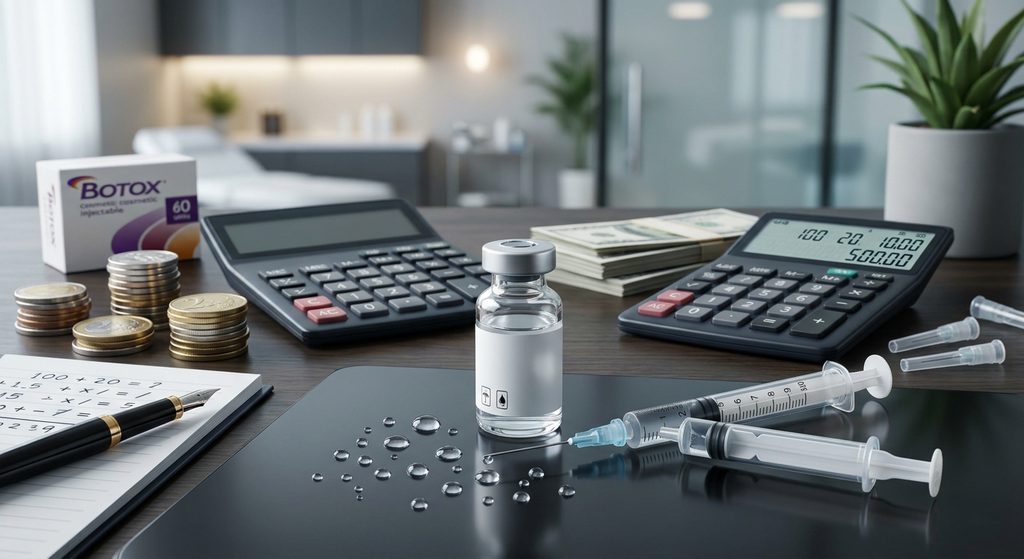
A Botox cost calculator can’t replace a real consultation, but it can tell you if the quote you’re hearing is reasonable. Ask three different providers what Botox costs, and the quotes can range from $200 to $1,200 for what sounds like the same basic treatment. That gap isn’t arbitrary — it comes down to a formula almost every clinic uses internally but rarely explains clearly: units × price per unit, with the total units needed varying enormously based on the area treated and your own facial anatomy.
Botox Cost Calculator

DATA INTELLIGENCE UNIT
Enter your estimated units and price per unit to see a realistic cost breakdown.
Finanlytic Tool
Botox Cost Calculator
Estimate your cost using the same per-unit math providers actually use.
Run your own numbers above, then read on for why the per-unit price alone tells you almost nothing until you know your unit count.
The Botox Cost Calculator Formula: Units × Price Per Unit
Botox pricing in the U.S. runs roughly $10 to $20 per unit nationally, with the sweet spot for most mid-tier providers landing between $12 and $16. Premium urban practices — Beverly Hills, Midtown Manhattan, South Beach — routinely charge $18 to $25 per unit, while rural and suburban providers often price closer to $8 to $13. But the per-unit rate is close to meaningless on its own. Someone treating just crow’s feet might need around 12 units total. Someone doing forehead lines, glabella, and crow’s feet together could easily need 50-60 units. Same per-unit rate, wildly different final bill.
Average Cost by Treatment Area
As a general guide: a single area like the forehead or crow’s feet typically requires 15-30 units, landing the total between $200 and $400 at national average rates. The glabella (frown lines between the eyebrows) commonly uses around 20 units. A full upper-face treatment — forehead, glabella, and crow’s feet combined — typically uses 40-60 units, putting the total between $480 and $1,200. The American Society of Plastic Surgeons‘ most recent published data puts the average botulinum toxin session at $435 to $530, which aligns closely with a mid-market full upper-face treatment — though that figure is a blended average across very different unit counts and treatment areas, not a prediction for any specific quote.
Per-Unit vs. Per-Area Pricing: Know Which One You’re Being Quoted
Clinics price two different ways, and knowing which applies to your quote matters. Per-unit pricing is the more transparent model — you’re charged for exactly what you use, the same way you’d pay for fuel by the gallon. Per-area pricing quotes a flat rate for a zone (say, $300 for the forehead), which feels simpler for first-time patients but can obscure how many units are actually included. Two people don’t need the same dose just because they’re both treating the same area — a stronger glabella may require meaningfully more product than a lighter one. If a clinic quotes by area, it’s worth asking directly how many units that price assumes for your specific case.
Why the Lowest Price Per Unit Isn’t Automatically the Best Deal
Pricing significantly below the national range — think $5 to $7 per unit — is a genuine red flag worth taking seriously, not just a lucky find. Prices that far under market rate can indicate diluted product, expired vials, or in the worst cases, counterfeit Botox entirely. Authentic product arrives in sealed 50-unit or 100-unit vials with a holographic label, purchased directly from the manufacturer. A provider unwilling to confirm this, or one pricing dramatically below every other quote you’ve gathered, is worth a second look before booking, regardless of how appealing the number seems.
What Actually Drives Your Specific Total
Beyond the base per-unit rate, several factors shift where your final number lands. Muscle strength varies by person and by sex — men generally require more units than women to achieve the same visual result, sometimes substantially more. Long-time Botox patients often need less product over time as muscles weaken with repeated treatment, while first-time patients with deeper, more established lines may need more upfront. Provider credentials factor in too: a board-certified physician in a major metro area typically charges meaningfully more than a nurse injector in a smaller market, even for an identical unit count, reflecting training, experience, and overhead rather than a different product.
Finanlytic Takeaway
FINANLYTIC | DATA INTELLIGENCE UNIT | Analysis by Hugo | Lead Market Strategist
A Botox cost calculator earns its value by making the real formula visible: units × price per unit, not a flat number tied to treatment area alone. The per-unit rate you’re quoted means little without knowing your specific unit count, and a price that looks unusually low is worth verifying rather than assuming it’s simply a better deal. Ask for the total estimated cost and the specific unit count during your consultation, that combination, not the advertised per-unit price alone, is what actually determines what you’ll pay.