

Financial Disclaimer: The strategic analysis from the Finanlytic Data Intelligence Unit is meant for informational and educational purposes only. Content created by Hugo Cutillas or other contributors shouldn’t be taken as professional investment, financial, tax, or legal advice. Trading in fast-paced markets carries a significant risk of losing capital. Finanlytic is not a registered financial advisor or broker-dealer. We analyze complex data signals, but remember, just because something worked in the past doesn’t guarantee it will work in the future. Always do your own research and consult with a certified financial professional before making any market moves.
Let’s face it: the cash in your wallet is starting to feel like a thing of the past. For ages, we relied on things we could actually hold: coins, gold, and paper bills. We built entire societies on the belief that “tangible” meant “secure.” But here we are in 2026, and that belief is starting to crumble. Value isn’t something you can touch anymore. It’s digital, it’s invisible, and, most importantly, it’s programmable. We’re not just talking about “online banking” here. That’s merely a digital facelift on an outdated, sluggish system. We’re entering the age of Code Supremacy. Blockchain and decentralized networks have evolved from being just a playground for tech enthusiasts; they’re now the backbone of the global financial system. It’s a transformation from wealth that sits idle to wealth that moves intelligently.
The death of the middleman
The traditional way of transferring money is honestly a bit of a joke. We still depend on “middlemen”, like banks, clearinghouses, and auditors, who take their cut and slow things down. In a world where communication is instant, why does a bank transfer still take days? It all comes down to Settlement Risk. You’re not just moving money; you’re moving a promise. Enter blockchain, which flips the script. It uses shared, unchangeable ledgers to enable Atomic Settlement. What does that mean for you? It’s pretty straightforward: the trade and the payment occur simultaneously. No more “pending” statuses. No human mistakes. No bank telling you “the system is down.” This represents a shift from permissioned finance to a world of math-based certainty. It’s more efficient, it’s global, and it doesn’t matter who you are or where you’re from.
To really grasp this major change, let’s take a look at how the old “middleman” model compares to the fresh, programmable infrastructure:
DATA INTELLIGENCE UNIT
| Feature | Traditional (Cash) | Programmable (Code) |
|---|---|---|
| Transaction Speed | 3-5 Business Days | Instant / Real-time |
| System Trust | Centralized Banks | Blockchain / Math |
| Global Access | Limited / Physical | Universal / Digital |
| Functionality | Static / Passive | Smart Contracts (Auto) |
Smart Contracts: Money with a Brain
A lot of folks believe that crypto is all about price charts, but that’s just scratching the surface. The real magic lies in Programmability. We’re talking about “Money with a Brain.” With Smart Contracts, we can set up a value to operate on its own. Picture this: an insurance payout that lands in your account the moment a sensor picks up a storm, and you don’t have to fill out a single form. Or think about a business that pays its employees by the second instead of waiting for the end of the month. That’s not just a fantasy; it’s all in the code. And let’s not forget the game-changer: Tokenization (RWA). We’re bringing real-world assets, like buildings, art, and gold, onto the blockchain. By slicing a skyscraper into a million digital tokens, we’re making it liquid. You can trade a share of a London office building as easily as sending a text. We’re turning the world’s wealth into something you can easily access.
Speed and Total Financial Inclusion
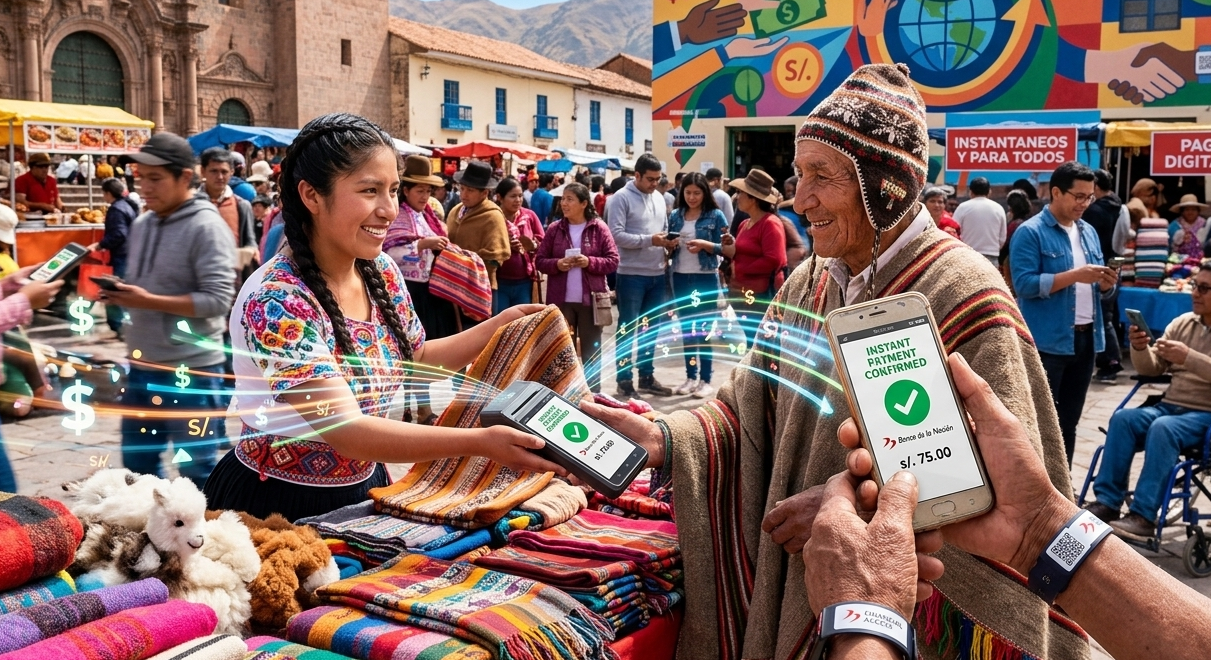
One of the most transformative aspects of a code-based financial system is its openness. In the traditional model, billions of people remain unbanked, often excluded from the economy simply because they lack the required documentation or live far from formal banking infrastructure.
Blockchain systems reduce much of that friction. Instead of relying on physical branches or extensive paperwork, access can be as simple as a digital wallet and an internet connection. Because blockchains are transparent and verifiable by design, transactions can be confirmed across the network, which also helps reduce some of the hidden costs associated with legacy banking systems.
For example, transferring funds from Lagos to London can now be settled quickly, with fewer intermediaries and lower fees than traditional cross-border rails.
This shift isn’t theoretical; it’s already being used at scale. And in many ways, this expanded access is one of the clearest signals of the broader transition toward programmable finance, where individuals gain more direct control over their economic activity than ever before.
The AI Multiplier
Money is now moving faster than ever, almost at the speed of light. In a world driven by code, cash is simply data. This is where Artificial Intelligence really shakes things up. AI never takes a break. It can sift through millions of transactions across multiple blockchains in the blink of an eye, spotting even the tiniest price discrepancies in mere milliseconds.
At Finanlytic, we refer to this as Autonomous Treasury Management. We’re witnessing a fascinating convergence where smart contracts carry out the predictions made by AI. It’s a fast-paced, self-regulating environment where those who are slow or lack knowledge are quickly outpaced by algorithms.
Risks and the Necessity of Software Level Security

Of course, the shift from paper-based money to code-based systems comes with real growing pains. Digital assets require a different kind of financial literacy, and many people are still catching up. Risks like smart contract bugs or lost private keys have replaced more familiar concerns like physical theft or bank insolvency. When money becomes software, it also inherits the need for software-grade security.
Instead of guarding physical vaults, the focus shifts to encryption, audited code, and secure protocol design. Regulators, meanwhile, are trying to adapt in real time, balancing consumer protection with the need to support innovation in programmable finance.
At the same time, the emergence of Central Bank Digital Currencies (CBDCs) reflects the state’s effort to bring sovereign money into the digital era. That transition is likely to be uneven and at times volatile.
Still, the overall direction is becoming clearer: when properly designed and audited, digital financial systems can offer a level of efficiency and resilience that physical infrastructure simply cannot match.
The Global Shift Toward Native Digital Infrastructure
Take a look around, and it’s pretty obvious that code is stepping in to take the place of cash in our wallets and the ledgers we used to rely on in traditional banking. Central banks in major economies are already experimenting with digital currencies, trying to keep up with the fast-changing financial landscape. Meanwhile, global remittances are getting quicker and cheaper, and programmable assets are making it possible for more people to own a piece of things like real estate and private equity, markets that were once pretty much off-limits to anyone who wasn’t super wealthy. In this new environment, the financial system isn’t just a passive record of what’s happening economically; it’s turned into an active, interconnected web of global infrastructure. Cash, which used to be dependable, is now limited by its physical nature and can be slow to move. Code, on the other hand, is adaptable, speedy, and knows no borders.
This transformation hints at a fresh way of exchanging value, one that acts like a universal language, easily understood by systems and networks all over the globe, and becoming less tied to geography or traditional middlemen.
Finanlytic Takeaway
FINANLYTIC | DATA INTELLIGENCE UNIT | Analysis by Hugo | Lead Market Strategist
The future of money isn’t just on the horizon; it’s already here. It’s all coded in languages like C++, Solidity, and Rust. Traditional banknotes are becoming relics of the past. As value transforms into software, you face a straightforward choice: either learn the language of this new financial landscape or find yourself stuck in an outdated system that’s only getting slower and pricier with each passing day.
At Finanlytic, we believe that grasping the code is essential for maintaining your freedom. We’ve entered the age of algorithms. So, the question is: are you in control of the code, or is the code controlling you?