

Financial Disclaimer: The strategic analysis from the Finanlytic Data Intelligence Unit is meant for informational and educational purposes only. Content created by Hugo Cutillas or other contributors shouldn’t be taken as professional investment, financial, tax, or legal advice. Trading in fast-paced markets carries a significant risk of losing capital. Finanlytic is not a registered financial advisor or broker-dealer. We analyze complex data signals, but remember, just because something worked in the past doesn’t guarantee it will work in the future. Always do your own research and consult with a certified financial professional before making any market moves.
In the past, you could actually keep up with the pace of the world economy. Investors had the luxury of time to make adjustments while central bank decisions were deliberated over for months. It’s a dead world.
Everything will be moving at a “supersonic” speed by 2026. A disruption in an emerging market or a whisper in a central bank can quickly spread throughout the world. Markets now move based on expectations rather than facts. You are exit liquidity rather than an investor if you are holding off on making a move until the evening news.
To visualize the structural acceleration mentioned above, this video demonstrates how modern algorithms execute thousands of trades in the time it takes a human to blink. This is the pulse of the High-Velocity Era.
Velocity: The New “God” Variable
Growth, inflation, and interest rates were important factors for analysts in the previous playbook. Velocity is a more potent variable nowadays.
Information is instantaneous. Institutional algorithms have already completed thousands of trades, changed the price, and moved on while a retail investor is reading a “breaking news” alert. Being late is mathematically equivalent to being incorrect in this fast-paced setting.
Market Intelligence Insight: At Finanlytic, we measure the flow’s velocity rather than just observing what is moving. You are standing motionless on a highway if you are unable to track the velocity.
From Linear Cycles to Reflexive Feedback Loops
The old financial model was pretty straightforward: policy influenced the economy, and the economy moved the markets. In 2026, that clean sequence doesn’t really hold up anymore. What we’re seeing instead is something much more circular, what’s often referred to as reflexivity, a concept associated with George Soros. At its core, it’s the idea that markets don’t just reflect reality, they actively shape it.
These days, markets aren’t only reacting to hard data; they’re reacting to what they expect that data to be. That creates a feedback loop. Market moves, things like shifts in liquidity, credit conditions, or overall risk appetite- start influencing real-world behavior almost immediately. Consumers adjust. Companies rethink investments. By the time official numbers like GDP or inflation are released, the economy has often already shifted in response to what markets thought those numbers would show.
That’s part of what makes the system feel so unstable. The observer and the system being observed are constantly influencing each other in real time.
Why the Economy Feels Fragile
You hear the word “fragile” a lot when people talk about today’s economy. But it’s not necessarily more vulnerable than it was in the 1990s; it just moves a lot faster. High-frequency systems amplify everything, both real signals and background noise. What used to be a minor policy tweak can now spiral into something like a gamma squeeze or a large-scale liquidation that looks extreme on a chart.
There’s basically no margin for error anymore. Market participants don’t have the luxury of taking time to think things over. Any mistake in analysis tends to get picked off almost immediately by algorithms built to do exactly that. That constant speed also takes a mental toll. It’s hard to build real long-term conviction when the story seems to change every couple of days.
Technology as the Ultimate Accelerator
Money behaves like software when it turns into software. AI doesn’t hold out for quarterly reports. It gathers information from massive sentiment analysis, real-time credit card spending, and satellite photos of shipping ports.
Economic time has been shortened. What used to take an entire fiscal year now takes only a few weeks to complete.
Institutional Dominance and the “Crypto Lab”
Smart Money Pre-emption
Global asset managers like BlackRock or Vanguard don’t wait for full confirmation anymore. They act on the first hints of a signal, even if it’s just a small edge.
In markets this fast, being even slightly ahead of competitors is enough to capture most of the available alpha.
The Crypto Stress Test:
The cryptocurrency market is perhaps the clearest example of the “high-velocity era.” Running 24/7/365 without the circuit breakers or pauses of traditional exchanges, it acts as a continuous, real-time laboratory for global risk.
Because it reacts instantly to shifts in liquidity, sentiment, and macro expectations, it is often one of the first places where stress in the financial system shows up. In that sense, it can function as an early signal of broader cracks forming across global markets.
The Regulatory Gap: Bicycles Chasing Supersonic Jets
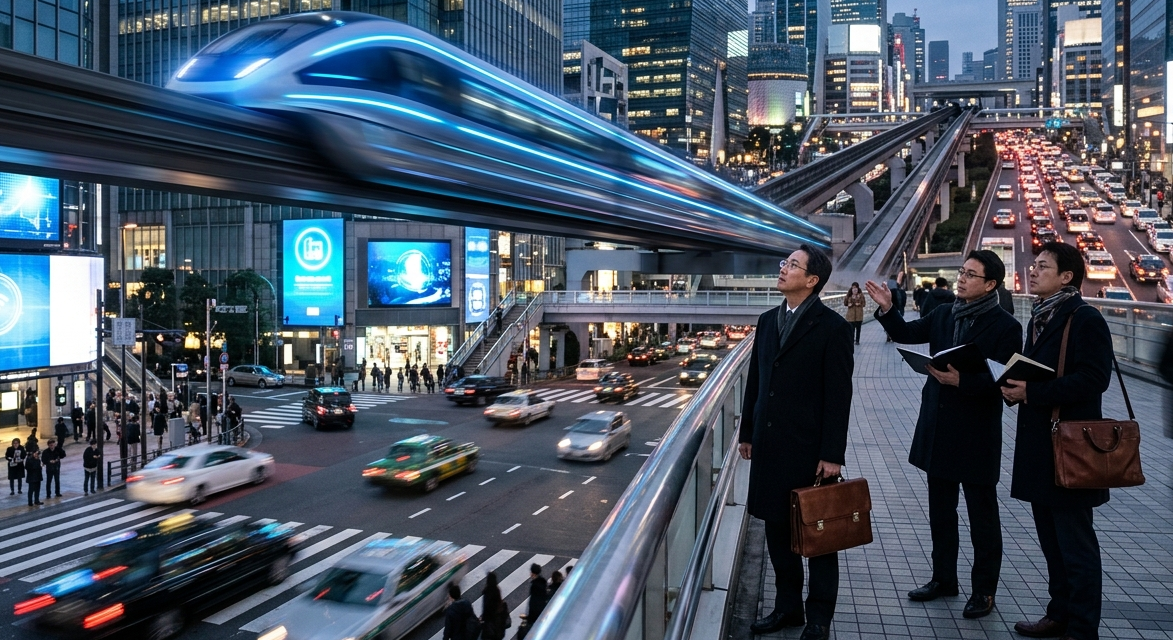
In 2026, our regulators’ inherent slowness poses the greatest risk. Central banks are intentional and motivated by precedent. While the market is flying a supersonic jet, they are riding bicycles. The market is already preparing for a recession by the time a rate increase is announced to “cool” the economy. The most hazardous (and lucrative) market signals originate from this gap between policy and reality.
The Winners and Losers of Speed
In an economy defined by velocity, agility matters more than anything else.
The winners are data-driven decision-makers who manage risk well and can adjust their views within hours. They’re not tied to a single narrative; they follow the data as it evolves.
The losers are those with fixed mindsets: slow-moving institutions, rigid approval structures, and anyone whose reaction time is measured in weeks rather than minutes. In this environment, standing still is no longer safe; it’s a risk in itself.
Finanlytic Takeaway

FINANLYTIC | DATA INTELLIGENCE UNIT | Analysis by Hugo | Lead Market Strategist
In 2026, velocity—rather than uncertainty—will be the market’s defining characteristic. Traditional long-term conviction is now a dangerous trap if it isn’t supported by real-time data due to the compression of time.
Those who can change their opinions in a matter of hours rather than weeks will be the winners of this era. The slow, the inflexible, and those who still think in terms of the 20th century are the losers.
The illusion of being motionless while everything around you speeds up is the true danger, not chaos. Are you observing the flow or the clock?