
Financial Disclaimer: The strategic analysis from the Finanlytic Data Intelligence Unit is meant for informational and educational purposes only. Content created by Hugo Cutillas or other contributors shouldn’t be taken as professional investment, financial, tax, or legal advice. Trading in fast-paced markets carries a significant risk of losing capital. Finanlytic is not a registered financial advisor or broker-dealer. We analyze complex data signals, but remember, just because something worked in the past doesn’t guarantee it will work in the future. Always do your own research and consult with a certified financial professional before making any market moves.
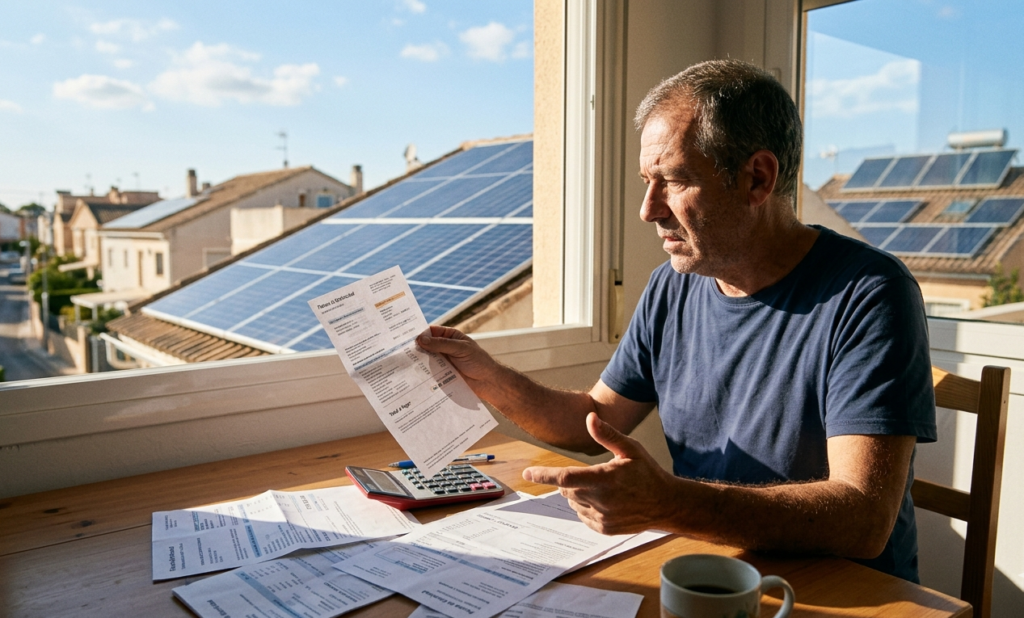
As we step into April 2026, we’re witnessing what could be one of the biggest economic heists in recent memory. On one hand, the cost of generating electricity has plummeted. Thanks to advancements in tandem-solar efficiency and the large-scale adoption of solid-state storage, the price of a kilowatt-hour is nearly at zero. Yet, on the flip side, your monthly bank statement continues to be a source of anxiety. The sun is providing endless energy for free, but your utility company is still charging you as if it were 1970.
This is the Energy Paradox of 2026. We were led to believe that the green transition would spread wealth more evenly; instead, it seems to have been twisted into a new form of rent-seeking. The system hasn’t resolved the energy crisis, it’s just found a way to tax sunlight before it even reaches your home.
The Era of Artificial Scarcity
In a well-functioning market, when production costs drop by a whopping 80%, you’d expect consumer prices to follow suit. But in 2026, energy doesn’t operate in a typical market; it’s part of a Controlled Grid.
As solar and wind energy became “too cheap to meter” at the generation level, the traditional power companies shifted their approach. They transitioned from being “producers” to becoming “gatekeepers.” This shift is why your energy bill is now filled with charges like “Infrastructure Levies,” “Grid Maintenance Fees,” and “Stability Surcharges.” These aren’t just technical necessities; they’re essentially Financial Tolls. They’re charging you for the “pipe” because they can no longer justify charging you for the “water.”
At Finanlytic, we refer to this situation as The Grid Siege. The system is keeping prices high to cover the enormous debts tied to outdated gas and coal plants that are still lingering on their balance sheets. So, you’re not just paying for electricity; you’re actually subsidizing the poor investments of the old-school energy giants.
Why the Government Wants Your Bill High
The harsh reality of April 2026 is that governments are quietly benefiting from this expensive situation. Energy has become the most effective “Hidden Tax” ever created. A large chunk of every dollar you spend on energy ends up back in the hands of the state through VAT, specific energy taxes, and carbon fees. If energy prices were allowed to truly reflect their actual technological worth (which is nearly zero), government revenues would plummet dramatically. To steer clear of a sovereign debt crisis, they need your bills to remain high. They’re using the “Green Transition” as a moral cover to safeguard their financial stability. It’s like Fiscal Vampirism: keeping the cost of living elevated to prevent the downfall of a failing monetary system.

DATA INTELLIGENCE UNIT
| Metric | Technology Cost (Solar/Storage) | Consumer Bill (The Reality) | Finanlytic Takeaway |
| Production Cost | -50% (vs 2024) | +12% (Average Increase) | Technology is being “taxed” out. |
| Infrastructure Fees | Stable Tech | +40% (Structural hike) | The “Pipe” is the new Monopoly. |
| Sovereign Risk | Deflationary | Inflationary Proxy | Energy bills are the new income tax. |
| Wealth Impact | Growth potential | Asset Poverty engine | You are fuel for the legacy system. |
The “Stranded Asset” Trap
By April 2026, the global energy scene is cluttered with what we call “Stranded Assets”—those trillion-dollar investments in outdated grid technology and fossil fuel plants that have lost their economic value. In a truly free market, these companies would face bankruptcy. Yet, in 2026, they’re getting “bailed out” every month, and guess what? It’s coming straight from your electricity bill.
This situation is a huge burden on the entire economy. When energy costs are artificially high, everything else follows suit. From the groceries in your fridge to the servers powering your AI tools, you’re essentially paying a “Legacy Tax” that hinders innovation and keeps the middle class stuck in a cycle of financial exhaustion.
How to Break the Siege
In 2026, sitting around hoping the system will “lower prices” is a recipe for financial disaster. You need to take charge and be the rebel in your own life.
Invest in the “Exit”: The smartest investment you can make in 2026 isn’t a stock or a bond; it’s about gaining localized energy independence. Off-grid solar panels and private storage systems are now so efficient that they can pay for themselves in under 36 months. This means an instant, tax-free boost to your disposable income.
Short the “Gatekeepers”: Traditional utility companies, burdened with massive debts, are the “zombies” of 2026. As more people shift towards micro-grids and private energy production, these giants are headed for a downward spiral. Steer clear of them in your long-term investment strategy.
Bet on “Energy Intensive” Innovators: Keep an eye out for companies that have established their own private power networks, think autonomous factories and AI data centers that don’t depend on the public grid. They’re the only ones poised to take advantage of the 0% marginal cost of energy, which will lead to skyrocketing profit margins.
Finanlytic Takeaway
FINANLYTIC | DATA INTELLIGENCE UNIT | Analysis by Hugo | Lead Market Strategist
The sun is a gift that’s free for everyone, yet the system is set up to keep you in the dark about it. The difference between what it actually costs to produce a kilowatt and what you end up paying is what we call the “Freedom Gap.” Come April 2026, your mission is straightforward: understand that the “Energy Crisis” has become a matter of politics rather than a technical issue. You’re being asked to shoulder the burden of a failing financial model.
Don’t let yourself be the lifeline for their poor decisions. Take control of your own energy production, or you’ll always be fueling their failures.