

Financial Disclaimer: The strategic analysis from the Finanlytic Data Intelligence Unit is meant for informational and educational purposes only. Content created by Hugo Cutillas or other contributors shouldn’t be taken as professional investment, financial, tax, or legal advice. Trading in fast-paced markets carries a significant risk of losing capital. Finanlytic is not a registered financial advisor or broker-dealer. We analyze complex data signals, but remember, just because something worked in the past doesn’t guarantee it will work in the future. Always do your own research and consult with a certified financial professional before making any market moves.
The classic middle-class dream is slowly slipping away from our grasp. It’s not just a passing thought; it’s a fundamental decline in the value of our time and hard work. Even though official inflation rates might suggest things are getting better, the “sticker shock” is still very real because the global financial system has changed for good. Fast forward to 2026, and the truth is evident: the divide between earning a paycheck and living comfortably is growing. We’re not just experiencing a temporary surge in prices anymore; we’ve entered a new phase where the cost of simply “being normal” has turned into a luxury.

DATA INTELLIGENCE UNIT
| Economic Driver | Cheap Money Era (2010-2021) | New Architecture (2026) |
| Interest Rates | Near 0% (Easy Credit) | Normalized Levels (Expensive Capital) |
| Globalization | Mass Outsourcing (Low Prices) | Near-shoring / Security (Premium Prices) |
| Housing | Primarily Residential Asset | Institutional Financial Asset |
| Inflation | Transitory / Low | Structural / “Sticky” Phenomenon |
The Invisible Anchor of “Sticky Prices”
One of the harsh truths about the economy in 2026 is something called Price Stickiness. In theory, when the costs of raw materials or energy go down, we should see consumer prices drop too. But in reality, that hardly ever happens. Once the market gets used to a higher price, whether it’s for a gallon of milk or a subscription service, that price tends to stick around. For the middle class, this means a constant erosion of purchasing power.
While companies are busy maximizing their profits by keeping prices high even when their costs level off, consumers are left to pick up the tab. Unless your income is skyrocketing, you’re essentially facing a quiet pay cut every quarter that these stubborn prices stay at their inflated levels.
The Death of Cheap Credit and the Capital Trap
For more than ten years, the global economy thrived on a “free money” approach that really skewed our understanding of risk. But as central banks have had to raise interest rates to tackle ongoing inflation, that era has come to an end. This change is hitting the middle class hard from both ends of the financial spectrum. On one hand, the direct costs of debt, like mortgages, car loans, and credit, have skyrocketed, turning what used to be markers of success into burdensome debt traps. On the other hand, businesses grappling with these steep borrowing costs are passing those expenses straight onto consumers. The days of zero-cost capital are behind us, and in this new landscape, consumers are left to bear the brunt of the financial system’s debt.
To help our readers truly grasp how currency values fluctuate across borders, the Finanlytic Data Unit has put together this insightful analysis. This presentation simplifies the intricate workings of purchasing power, showing why nominal income often struggles to keep up with the structural inflation we’re seeing in the economic landscape of 2026.
The Wage-Price Illusion: Losing While Earning
One big reason everything seems to cost more these days is that salary increases often feel more like a trick than a treat. Sure, a 4% or 5% raise looks good on paper, but when you consider that essentials like housing, energy, healthcare, and food are skyrocketing at 8% or more, that “pay bump” really turns into a loss when you look at it in real life.
This Wage-Price Gap sheds light on the growing divide in our society: people are technically making more money than ever, yet their quality of life is taking a hit. Your paycheck might be bigger, but its ability to support your lifestyle is dwindling, leading to a quiet decline in living standards for those who depend solely on their salaries.
De-globalization and the “Security Premium
For the past thirty years, globalization has been a powerful deflationary force, keeping prices low by tapping into the cheapest labor markets around the world. However, that age of extreme efficiency is now giving way to a focus on “Resilience” and “Near-shoring.” As geopolitical tensions shift the landscape of supply chains, businesses are starting to relocate production closer to home or to more reliable regions. While this transition may bolster national security and lessen supply chain vulnerabilities, it also comes with a built-in Security Premium. Manufacturing in regulated, higher-wage areas signals the end of the “dollar store” economy. We’re moving away from a “Just-in-Time” model to a “Just-in-Case” approach, and every layer of that added redundancy is reflected in the final price you see at checkout
Housing as a Financialized Asset Class
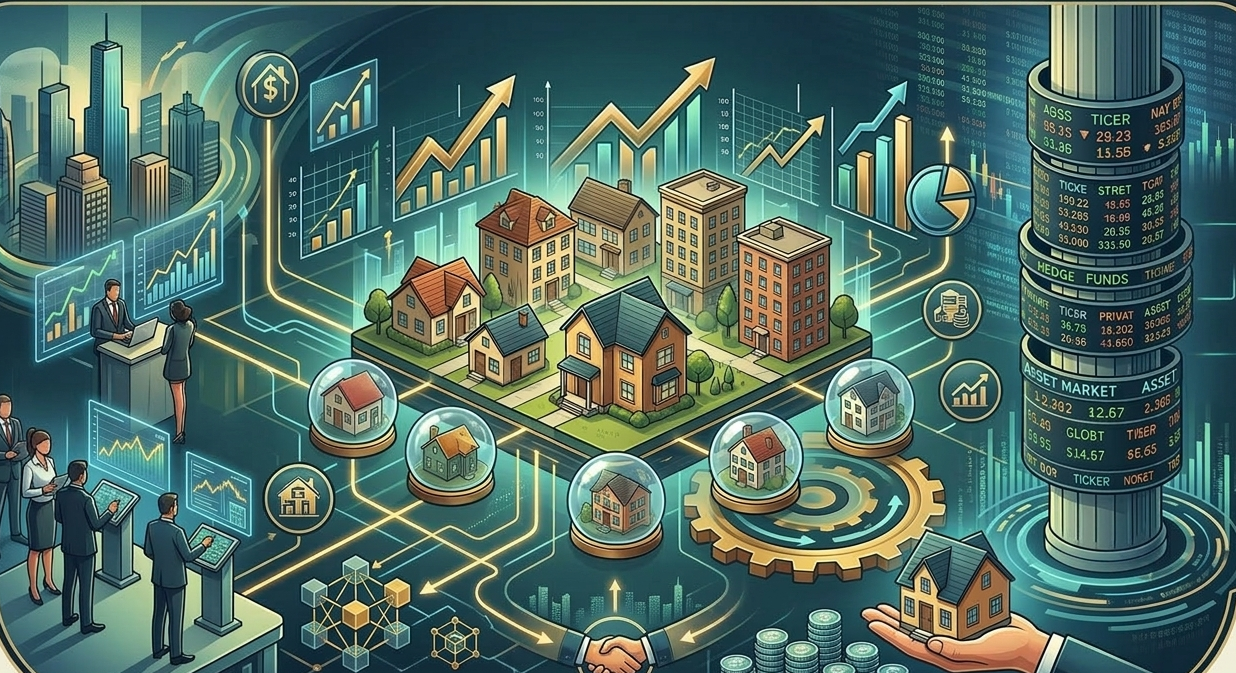
It’s hard to ignore the intense pressure the middle class is facing due to the complete financialization of real estate. Over the past ten years, housing has shifted from being a basic need to a lucrative investment opportunity for big players like institutional investors, hedge funds, and private equity firms. By viewing homes as profit-generating “baskets” of capital instead of places to live, these institutional buyers have created a disconnect between house prices and local median incomes. With interest rates still high, the middle class is being pushed into a “rentership society.” When a staggering 40% to 50% of a household’s net income goes toward housing costs, it becomes nearly impossible for those without existing capital to build their own wealth.
The Stubborn Reality of Service Inflation
While the prices of physical goods can sometimes change, service-based inflation tends to be pretty stubborn. The costs associated with healthcare, education, insurance, and professional services are largely influenced by human labor. As the cost of living goes up, these professionals seek higher wages, creating a cycle that’s really tough for central banks to break. Unlike a smartphone or a TV, you can’t just send your local healthcare or your child’s education to a cheaper market. These services are tied to specific locations and require a lot of labor, making them the ultimate “inflation anchors” that keep the overall cost of living elevated, no matter what’s happening in the commodity markets.
Strategy for Investors: Defending Your Value
In today’s world, sticking to the adage of “saving for a rainy day” might actually lead to losing wealth over time. To navigate the changes coming in 2026, it’s essential to shift your mindset from just consuming value to actually owning the assets that create it.
Productive Equities: Look for companies that have strong “pricing power”, those that can increase their prices in line with inflation without losing customers.
Hard and Real Assets: Things like commodities, energy infrastructure, and well-located real estate are still the best bets against a currency that’s losing value.
The Efficiency Hedge: Invest in technology sectors, especially AI and automation, that are being used to tackle the issues of high labor costs and rising service prices.
Finanlytic Takeaway

FINANLYTIC | DATA INTELLIGENCE UNIT | Analysis by Hugo | Lead Market Strategist
The world hasn’t just become “more expensive” by chance; the basic principles of money and credit have shifted for a new age. Now, the middle-class lifestyle is being seen as a luxury because the divide between what people earn from work and what they own in assets has never been wider.
If you want to succeed in 2026, it’s time to stop being the one who just takes on higher prices and start being the one who owns the assets that gain from those increases. The journey to financial independence isn’t about how much you can save anymore; it’s about how much of the productive economy you can actually own.