
Financial Disclaimer: The strategic analysis from the Finanlytic Data Intelligence Unit is meant for informational and educational purposes only. Content created by Hugo Cutillas or other contributors shouldn’t be taken as professional investment, financial, tax, or legal advice. Trading in fast-paced markets carries a significant risk of losing capital. Finanlytic is not a registered financial advisor or broker-dealer. We analyze complex data signals, but remember, just because something worked in the past doesn’t guarantee it will work in the future. Always do your own research and consult with a certified financial professional before making any market moves.
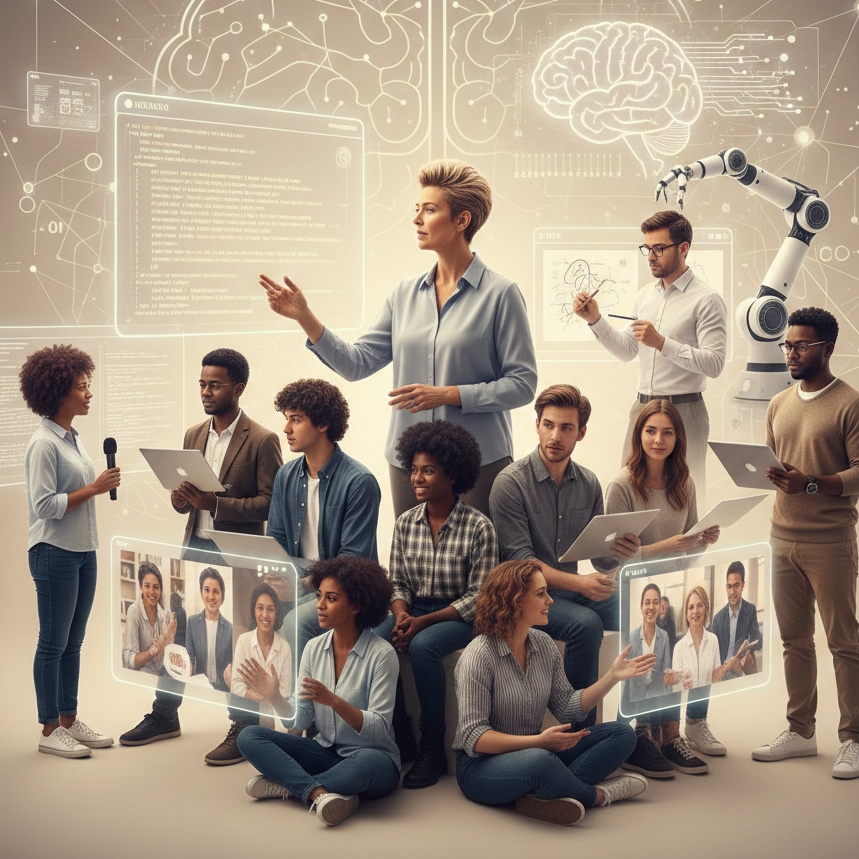
Back in 1990, having a university degree was like holding a golden ticket; it practically guaranteed you a spot among the professional elite. Fast forward to 2026, and that same degree feels more like a starting line that’s slipping further away. With AI taking over many technical tasks, the middle class is facing a harsh reality: “Hard skills” are losing value faster than the cash in your wallet. The old playbook, put in the effort, earn your credentials, and manage data in a spreadsheet, is officially outdated. If your job is just about following steps that a machine can easily replicate, then you’re not really an employee; you’re just filling a space.
DATA INTELLIGENCE UNIT: THE SKILL DEPRECIATION INDEX (2026)
| Legacy Skill (1990-2020) | 2026 Replacement | AI Exposure | Human Value Focus |
| Technical Coding | Natural Language Architecture | 98% | System Design |
| Financial Reporting | Predictive Signal Synthesis | 95% | Strategic Interpretation |
| Legal Research | Automated Case Auditing | 90% | Ethical Accountability |
| Academic Credentials | Proven “Centaur” Output | 85% | Biological Judgment |
The Collapse of the “Credential Shield”
For years, the middle class has depended on universities to help secure those coveted high-paying jobs. But by 2026, everything has changed. AI tools can now handle a whole year’s worth of “junior analysis” in just a few seconds. The issue isn’t about working hard; it’s that the “Spreadsheet Warrior”, the one who puts in 80-hour weeks just to tidy up data, has been outdone by a tireless script. Your degree got you ready for a time when simply “knowing the formula” was sufficient. Nowadays, that formula is readily available. What truly counts is understanding why the outcome is significant, especially when a geopolitical crisis hits.
The New Global Currency
If a machine can provide the answer, then the value of that answer plummets to nothing. The new gold isn’t just information; it’s Judgment. At Finanlytic, we refer to this as the “Centaur Edge.” It’s all about hybrid intelligence, where humans step back from the heavy lifting and take on the role of “Strategic Oversight.” By 2026, the professional who stays relevant won’t be the one who has memorized the most formulas; it’ll be the one who knows how to assess the machine’s output for those “fat tail” risks.
Just like a static degree won’t safeguard your career, keeping your cash stagnant won’t protect your wealth. Discover how to adapt your investments in our analysis: Why ETFs Are Becoming the Default Plan for the Middle Class, where we explain why traditional saving methods are becoming a losing strategy.
The Biological Input and Wealth Psychology
Algorithms are fantastic at crunching numbers and logic, but they really struggle with something as essential as trust. In high-stakes situations, like mergers, private equity deals, or managing a family’s life-saving, the final call is never handed over to a machine. It’s always a person who relies on another person’s gut feeling.
Your degree probably overlooked one of the most vital “hard skills” for this decade: Wealth Psychology. Grasping how fear can affect a client during a market downturn, or how to handle the emotional intricacies of a corporate takeover, is something AI just can’t replicate. Trust is like a biological currency, and in a world that’s becoming increasingly automated, being “human” is your rarest and most valuable asset.
Accountability: The Final Frontier
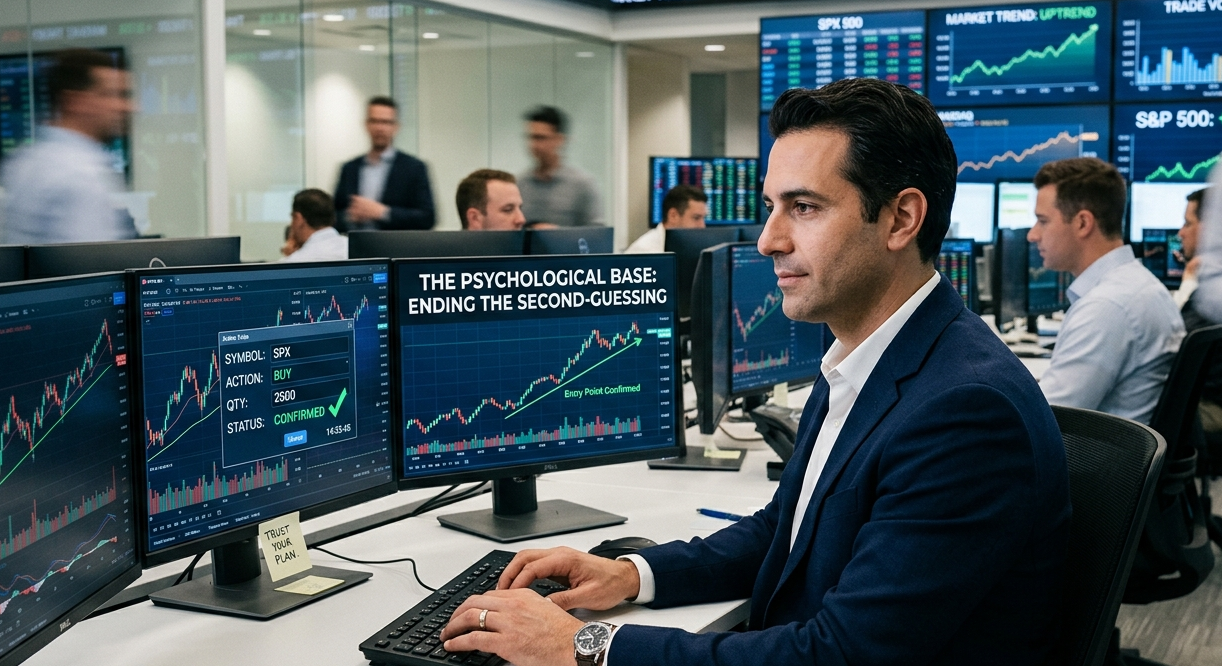
As we move deeper into an era where automation shapes our financial and labor systems, the necessity for a Moral Circuit Breaker becomes crystal clear. You can’t just send an AI to a congressional hearing to justify an ethical blunder. And you certainly can’t hold an algorithm accountable for losing a billion dollars in a sudden market crash. In 2026, effective leadership is all about navigating the “Unknown Unknowns.” The one thing that can’t be delegated to a machine is Accountability. If you’re the one who signs off on the risks, you’re absolutely essential. But if you’re just the person who compiles the report, you might as well be a thing of the past.
Finanlytic Takeaway
FINANLYTIC | DATA INTELLIGENCE UNIT | Analysis by Hugo | Lead Market Strategist
To truly thrive in 2026, it’s time to shift your mindset from being just a “worker” to embracing the role of a System Architect.
Audit the AI: Don’t shy away from the tools; instead, hone your skills to recognize their flaws and biases.
Double Down on Empathy: Negotiation and persuasion aren’t just “soft skills” anymore; they’re the essential skills that deliver the best returns.
Become a Generalist: While AI shines in specialized areas, your true worth comes from weaving together insights from geopolitics, energy, and finance. In the 2026 economy, your degree will feel like a relic of the past. Your judgment will be your most valuable asset. As machines take over routine tasks, it’s time for us humans to rise up and lead.