
Disclaimer: The content on Finanlytic is for informational and educational purposes only and does not constitute financial, investment, or career advice. Always consult a qualified professional before making decisions based on this information.
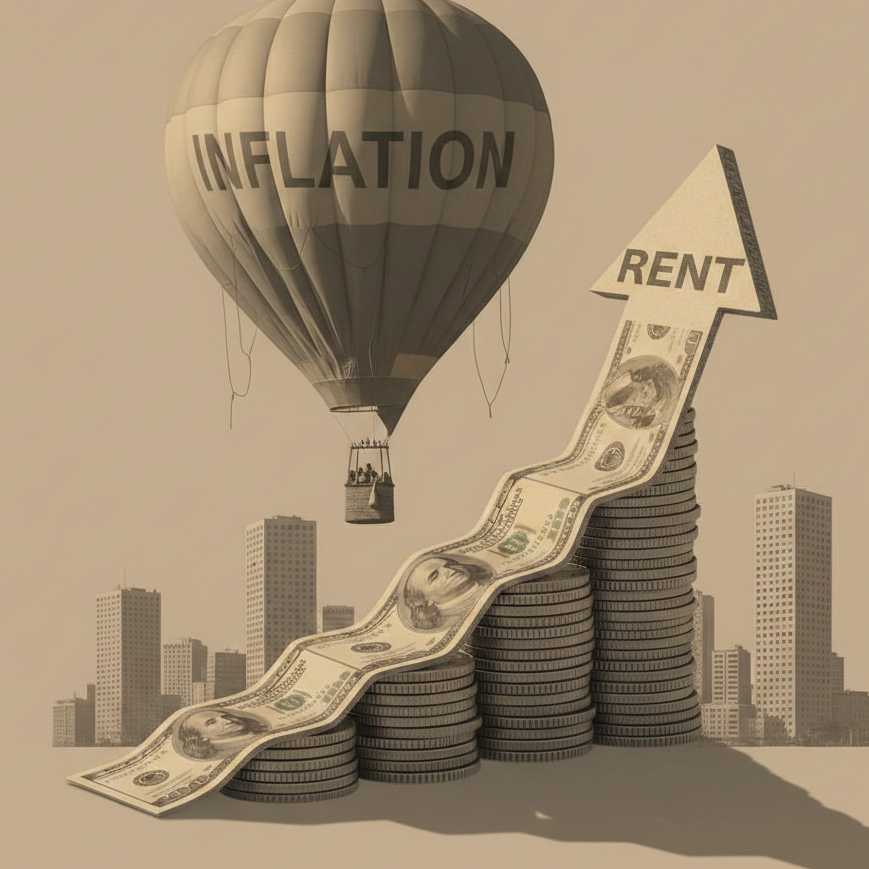
In early 2026, a sense of relief was expected to wash over the global economy. With headlines announcing that inflation is finally “under control”—dropping from the volatile peaks of previous years—millions of households naturally anticipated a reprieve in their largest monthly expense. However, a painful paradox confronts families today: Rent remains stubbornly high, persistently rising even as other inflation reports improve. For most, the cost-of-living crisis has not vanished; it has evolved into a permanent structural pressure. Understanding why housing defies the cooling of general prices requires looking past the “headline numbers” and into the unique, friction-heavy mechanics of the rental market.
The Sticky Nature of Housing Contracts
Inflation reflects the average price changes across a volatile basket of goods like food and energy. However, rent is fundamentally “sticky.” While gas prices can drop 10% in a single week due to global supply shifts, rental contracts are typically locked for 12 months or more, creating a delayed reaction to economic cooling. Landlords rarely slash prices simply because the national inflation rate moved from 6% to 3%. In the 2026 housing market, prices act as a long-term economic contract; once they reach a new plateau, they almost never retreat. This lack of downward flexibility means that high rents have become the “new baseline” for the foreseeable future.
The Chronic Supply Deficit and the “Locked-Out” Generation
The primary driver of rising rents in 2026 is a stubborn reality: the world has a massive Housing Construction Deficit. Constrained by high material costs and restrictive zoning, supply simply cannot keep pace with demand. When supply is this tight, rents do not need “inflation” to climb; they rise because competition for every square foot remains intense. This scarcity is a core contributor to the middle-class squeeze, where housing costs now routinely consume upwards of 40% of median household income, leaving virtually no margin for error in the family budget.
Furthermore, elevated interest rates have created a “Locked-Out” generation. As the cost of a mortgage remains high, the traditional “exit” from the rental market—buying a home—has become inaccessible for many. This creates Rental Congestion, where middle-income professionals who would typically be building home equity are instead forced to compete for the same apartments as lower-income renters. This sustained surge in demand keeps price floors high, regardless of falling grocery or energy costs.
Landlords and the Hidden Structural Costs
While it is tempting to view property owners as the sole beneficiaries, landlords in 2026 are battling their own permanent upward pressures. Insurance Premiums have skyrocketed due to climate-related risks and rising replacement costs, while Property Taxes continue to climb as local governments struggle with their own fiscal deficits. Unlike a temporary spike in energy prices, these are structural overheads that do not decrease. These costs are inevitably passed on to the renter, ensuring that even if the “cost of goods” falls, the “cost of ownership” maintains a steady upward trajectory.
The Housing-Wage Gap and Local Overheating
The psychological toll of rent hikes is magnified by the Housing-Wage Gap. Even a respectable 4% raise is instantly swallowed by an 8% rent increase. Because housing is the “first dollar” spent in any budget, its inflation cuts deeper than any other category, leading to stagnant wealth accumulation. We also see Localized Hotspots; while national figures may look stable, specific regions investing in green energy or semiconductor manufacturing are seeing rent spikes that defy national trends. This geographic fragmentation makes it nearly impossible for workers to move for better opportunities, as the cost of a new lease often outweighs the benefit of a higher salary.
Finanlytic Takeaway
Rent rising while inflation cools is not an economic contradiction; it is a signal that the housing market is structurally broken. It is driven by supply constraints, high entry barriers for buyers, and fixed ownership costs that do not disappear with a better “headline” inflation number. For the modern household, rent is the clearest reminder that the crunch is not over—it has merely stabilized at a painful level. In this environment, waiting for “prices to drop” is no longer a viable financial plan. Success in 2026 requires a proactive shift: focusing on aggressive career pivots or side ventures to increase “top-line” income, as housing remains the ultimate drain on the path to financial sovereignty.