
Disclaimer: The content on Finanlytic is for informational and educational purposes only and does not constitute financial or investment advice. Always consult a qualified professional before making decisions based on this information.
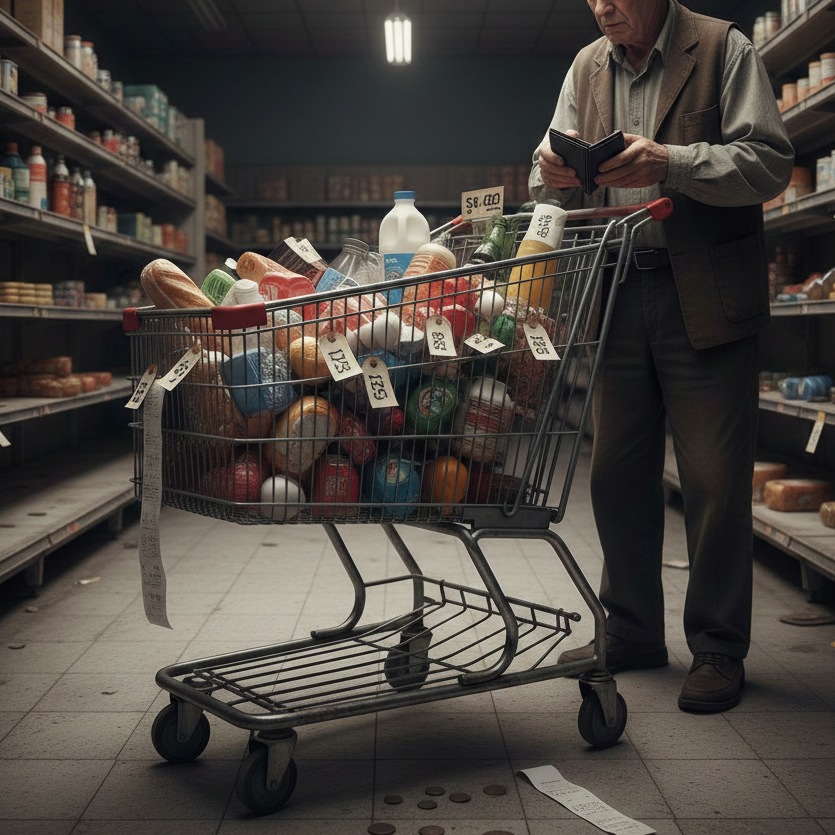
It isn’t just a lingering feeling or a trick of the mind; life in 2026 is objectively more expensive. From the grocery aisle to the monthly rent check, the cost of existence has scaled at a pace that feels disconnected from historical norms. Even when official inflation figures begin to simmer and central banks claim victory over price spikes, the persistent sticker shock remains a daily reality for millions. What we are experiencing is not a temporary price blip, but the culmination of profound economic shifts that are fundamentally altering the value of currency. To navigate this new landscape, we must look beyond the headlines and understand the structural forces that have permanently recalibrated the global financial architecture.
The Invisible Anchor of Sticky Price Phenomenon
One of the most frustrating aspects of modern economics is that prices almost never return to their previous levels, even after a crisis subsides. When inflation spikes due to supply chain disruptions or geopolitical conflict, businesses are forced to raise prices to protect their profit margins. However, when the underlying costs—such as energy or raw materials—eventually fall, those retail prices rarely follow them down. Economists refer to this as price stickiness, a psychological and operational anchor where higher prices become the new baseline once consumers grow accustomed to them.
For the average individual, this translates to a permanent loss of buying power. Once a product’s price has been “reset” at a higher plateau, it rarely retreats unless there is a severe economic contraction. This structural upward bias means that inflation does not just make things more expensive for a season; it permanently devalues the currency in your pocket, especially when your real income fails to keep pace with these new, entrenched price levels.
The Structural End of the Cheap Money Era
For more than a decade following the 2008 financial crisis, the global economy ran on an unprecedented supply of nearly free credit. Interest rates languished near zero, creating a lending environment that allowed governments, corporations, and households to take on massive debt at minimal cost. That era has officially ended, and the transition has been jarring. As central banks raised rates to combat the inflationary wave of the mid-2020s, the cost of capital skyrocketed.
This shift touches every corner of the economy with surgical precision. Mortgages have seen their financing costs double in many markets, making homeownership a secondary dream for many. Corporate credit has become a major overhead expense, forcing businesses to pay more to expand or even just to maintain operations, costs that are inevitably passed on to the final consumer. Even national debts are now consuming a larger portion of government budgets due to interest payments, leaving less capital available for public services. This new environment makes buying on time a dangerous and expensive strategy, further straining the household budget.
The Wage-Price Gap and the Erosion of Real Income
The primary reason why everything feels expensive today is that nominal wage hikes are often a statistical illusion. While an employee might see a four percent increase in their gross salary, that gain is meaningless if the cost of essentials like housing, energy, and food has risen by eight percent. In this scenario, your actual purchasing power has effectively shrunk. This widening disparity explains the pervasive feeling of being “poorer” despite technically earning more money than five years ago.
This erosion is exacerbated by the fact that core necessities are often the most sensitive to price increases. While luxury goods might fluctuate, the non-discretionary items that form the base of the human survival pyramid have seen some of the most aggressive and “sticky” price adjustments. Without a significant leap in productivity or a fundamental shift in labor dynamics, the gap between what people earn and what they can afford continues to create a state of chronic economic anxiety.
De-globalization and the End of Deflationary Tailwinds
For thirty years, globalization acted as a massive deflationary force that kept the prices of consumer goods remarkably low. By outsourcing labor to low-cost regions and building ultra-efficient, just-in-time supply chains, corporations were able to suppress the costs of everything from clothing to electronics. However, the tide has turned toward a more fragmented global trade map. Geopolitical tensions and the harsh lessons of recent supply chain vulnerabilities have led to a movement of near-shoring and friend-shoring.
While moving production closer to home increases a nation’s resilience and security, it significantly raises the cost of production. Labor in domestic markets is more expensive, and the environmental and regulatory standards are often higher. Consequently, the era of cheap, globally-sourced goods is being replaced by a more expensive, localized reality. We are paying a “security premium” on the products we consume, a cost that is now baked into the new economic architecture of 2026.
Housing as a Financialized Asset Class
Perhaps the greatest pressure point in the modern budget is the cost of shelter. Over the last decade, homes transitioned from being primarily a place to live into becoming global financial assets. Low interest rates fueled a massive influx of institutional capital into the real estate market, as hedge funds and private equity firms sought yield in a world of zero-percent bonds. This financialization pushed prices far beyond the reach of local median incomes in cities across the globe.
Today, we face a double whammy: home prices remain historically high due to low inventory and institutional holdings, while interest rates have made the monthly cost of a mortgage nearly twice as expensive as it was just a few years ago. When housing begins to consume forty or fifty percent of a household’s net income, every other expense—from healthcare to transportation—feels magnified. This “housing trap” is a primary driver of the modern feeling that the economy is broken for the average participant.
The Stubborn Nature of Service Inflation
While the price of physical goods can sometimes fluctuate based on commodity cycles, the price of services is notoriously stubborn. Healthcare, education, insurance, and professional services are driven primarily by labor costs. As workers demand higher pay to cope with their own rising costs of living, service providers must raise their fees to maintain their margins.
Unlike a physical commodity, you cannot easily outsource your local doctor or your child’s education to a cheaper region. These services are geographically tethered and labor-intensive, making their price increases a permanent and compounding burden on the modern budget. As the economy becomes more service-oriented, this service-led inflation becomes the dominant force keeping the cost of living at elevated levels.
Strategy for Investors: Defending Your Value
In an environment where currency is losing its reach and price stickiness is the norm, sitting on a pile of cash is no longer a safe strategy; it is a guaranteed way to lose purchasing power. Modern financial success in 2026 requires a total shift in mindset toward inflation-hedged assets. This involves seeking exposure to sectors that can grow their earnings faster than the consumer price index and focusing on companies that utilize technology to lower their own costs and increase margins despite the inflationary background.
Furthermore, investors are increasingly looking toward real assets such as commodities or strategically located real estate that hold intrinsic value regardless of currency fluctuations. Understanding these shifts is the first step toward financial defense. In a world where your dollar buys less, your greatest asset is your ability to strategically invest and adapt to the new economic architecture. For many, this means moving beyond the traditional savings mindset and recognizing in an era of persistent devaluation.
Finanlytic Takeaway
The world hasn’t just become “more expensive” by chance; the fundamental rules of money have been recalibrated for a new era. The combination of ending cheap credit, de-globalization, and the financialization of essential assets like housing has created a high-floor environment for prices. Recognizing that these shifts are structural rather than temporary is essential for any long-term financial plan. At Finanlytic, we believe that the only way to thrive in this new landscape is to move from being a victim of price increases to being an owner of the productive assets that drive the economy forward.