
Financial Disclaimer: The insights provided on Finanlytic are for informational and educational purposes only. Content authored by Hugo Cutillas or any contributors does not constitute professional investment, financial, or tax advice. While we strive for accuracy in our macroeconomic analysis, Finanlytic is not a registered financial advisor. Always perform your own due diligence or consult a certified professional before making financial decisions.
For decades, the global economy moved with a predictable and almost lazy cadence. Economic cycles took years to play out fully. Central bank policies were debated for months, implemented over several quarters, and often took years to actually ripple through the real economy. Investors lived in a world where they had the luxury of time, providing them with the opportunity to adjust, to re-think, and to breathe between major market shifts. That world is now officially extinct.
We have entered what many experts call the High-Velocity Era. Today, the global economy moves in the absolute blink of an eye. Shocks that used to take months to cross the ocean now zip across the globe in a matter of seconds. Markets do not wait for official news anymore; they anticipate, react, and often exhaust a trend before the mainstream media has even drafted a headline. This isn’t just a temporary phase of volatility, but rather a structural acceleration of the entire financial ecosystem that defines how wealth is created and lost in 2026.
To visualize the structural acceleration mentioned above, this video demonstrates how modern algorithms execute thousands of trades in the time it takes a human to blink. This is the pulse of the High-Velocity Era.
Speed is the New Fundamental
In the traditional investment playbook, you studied growth, inflation, and interest rates as the primary pillars of success. While those variables still matter, they have become secondary to a new dominant force which is Velocity. Information now flies instantly across digital networks, and capital amounting to trillions of dollars zips around the world in mere seconds. Algorithms, those invisible architects of our modern age, react faster than a human can even read a notification on their smartphone.
Consequently, a minor whisper of a policy shift or a small data surprise creates instant ripples across every conceivable asset class. Before this era, economic change was a subject to be studied primarily in retrospect. Now, you feel it happening in real-time as it unfolds. Markets no longer adopt a wait and see approach. Instead, they interpret and frequently overreact before the official numbers even confirm a shift. This permanent state of acceleration means that the gap between an event and the market’s response has virtually vanished.
From Linear Cycles to Reflexive Feedback Loops
In the old world of finance, the economic model was a straight line moving from policy to the economy and finally to the markets. In 2026, that linear model has been replaced by a chaotic, circular, and highly reflexive loop. This new reality is a constant interaction between markets, expectations, policy, technology, and human behavior. Every single element in this chain feeds back into the others at breakneck speed, creating a system that is far more complex than anything we have seen before.
Markets do not just react to raw data; they react to the expectation of data. This reaction then influences critical financial conditions such as liquidity, credit availability, and general risk appetite. These conditions in turn shape consumer behavior and corporate investment decisions. By the time the original data point is actually released to the public, the economy has already reshaped itself to accommodate the news. This constant loop makes the system feel inherently unstable, even when the underlying fundamentals are technically sound. The reflexivity of modern finance means that the observation of the economy actually changes the economy itself in real-time.
Why the Economy Feels Fragile
Many observers frequently describe today’s economy as fragile. In reality, it is not necessarily weaker than it was in previous decades, but it is simply much faster. High-velocity systems have a tendency to amplify both signals and noise equally. A small policy tweak that would have been ignored twenty years ago can now feel like a systemic earthquake. Short-term disruptions are often mistaken for long-term trends because the speed of the moves is so aggressive.
In this new environment, there is zero room for error. Markets no longer digest information slowly over lunch breaks or weekend closings. Mispricing is punished instantly by automated systems, and any form of hesitation carries a massive price tag for the investor. This is the fundamental reason why economic surprises hit much harder than they did in the past. The system has lost its traditional buffer time, meaning every action has an immediate and often disproportionate reaction.
Technology as the Ultimate Accelerator
Artificial Intelligence and automation are doing much more than just boosting corporate productivity; they are accelerating the speed of decision-making itself. Hiring, logistics, risk management, and lending are all moving faster because the systems underneath them have become autonomous. AI does not wait for a formal press conference or a quarterly earnings report to be filed. It operates on complex probabilities rather than waiting for absolute certainties, updating its worldview every time a new data packet arrives on the network.
As a result, economic time has been compressed significantly. What once took a full fiscal year to unfold now plays out in a matter of weeks. This transition is even more visible in the digital space, where traditional barriers to entry have been demolished by code. Understanding this shift is vital, because as we have explored previously, When money becomes software, it inherits the speed of software, leaving the physical world of slow transactions behind forever.
Institutional Dominance
Large financial pools now act on early signals rather than waiting for confirmation. They don’t seek 100% certainty, only a 1% edge over the competition. This “Smart Money” is always three steps ahead of the public narrative.
The Crypto Lab
Crypto is the High-Velocity Era in its purest form. Operating 24/7 without the friction of banking hours, it serves as a real-time stress test for global risk, providing early warning signals for the entire financial system
Capital Velocity in Action
The widening gap between the stock market and the actual economy often confuses retail investors, but the explanation is simple: capital velocity. Institutional capital has adjusted to this incredible speed much faster than our human-led institutions. By the time a trend becomes obvious to the general public, the infrastructure of “Smart Money” has already moved on to the next play. In this environment, being late is equivalent to being wrong.
To see this in its most unadulterated form, one must look at the crypto markets. These markets react to liquidity shifts, interest rate expectations, and global sentiment without the friction of traditional banking hours or holiday closures. Crypto does not wait for macroeconomic confirmation from a central bank; instead, it acts as a real-time laboratory. In an economy that seemingly has no brakes, the markets with the fewest constraints show us what is coming first, revealing how capital behaves when all traditional speed limits are removed.
Policy in a World That Outpaces Regulators
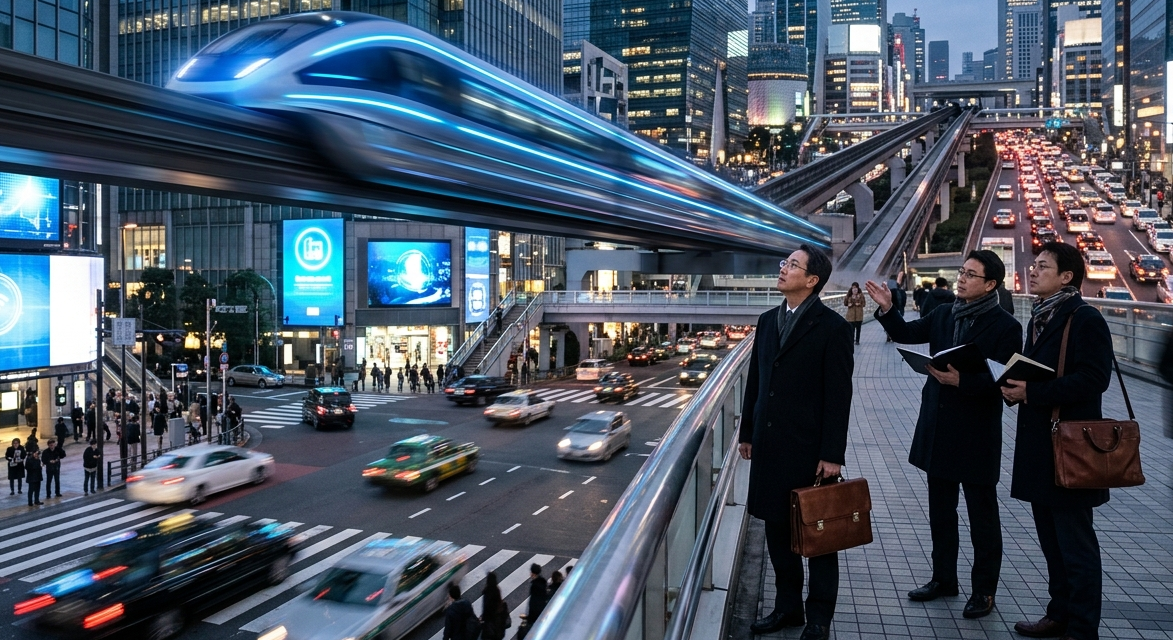
A significant problem arising in 2026 is that economic policy was originally designed for a much slower era. Central banks and governments are inherently slow institutions that rely on lengthy deliberation and historical precedent. However, the markets they try to regulate are now light-years ahead of them. This creates a dangerous mismatch in the global financial architecture.
By the time a central bank decides to raise rates to cool an overheating economy, the market has often already priced in the coming recession and moved on to the next phase of the cycle. In a high-velocity economy, the management of expectations has become far more important than the actual policy itself. Regulators are essentially trying to catch a supersonic jet while riding a bicycle, leading to policy errors that can have massive consequences.
The Winners and Losers of Speed
A fast economy naturally rewards the adaptable and harshly punishes the rigid. The winners in this era are nimble systems, data-driven decision-makers, and risk managers who truly understand the nature of dynamic volatility. These are the individuals and firms that do not tether themselves to old dogmas but instead move with the flow of the data.
On the other hand, the losers are those who rely on static strategies, overconfident analysts who refuse to change their minds, and anyone whose reaction time is measured in months rather than hours. In a world of constant movement, standing still is the greatest risk of all. We must also consider the cognitive load of this era, as the unending movement and constant volatility tax the human brain heavily. Investors often feel worn out even when they are winning because conviction is harder to maintain when the narrative shifts every single week.
Finanlytic Takeaway
FINANLYTIC | DATA INTELLIGENCE UNIT | Analysis by Hugo | Lead Market Strategist
The defining trait of our current time is not instability, but rather velocity. Markets, technology, and human behavior are now interacting at speeds that squeeze time and magnify every single impact. If you try to navigate today’s financial world with a perspective rooted in the twentieth century, you will inevitably be left behind by the sheer pace of change.
In a high-velocity era, the only true risk is standing still while the world moves forward. Clarity of thought and the ability to process information quickly are the only shields against the deafening noise of the modern market. At Finanlytic, we focus on helping you stay ahead of that curve, ensuring that you understand not just what is happening, but the speed at which it is occurring.