
Financial Disclaimer: The insights provided on Finanlytic are for informational and educational purposes only. Content authored by Hugo Cutillas or any contributors does not constitute professional investment, financial, or tax advice. While we strive for accuracy in our macroeconomic analysis, Finanlytic is not a registered financial advisor. Always perform your own due diligence or consult a certified professional before making financial decisions.
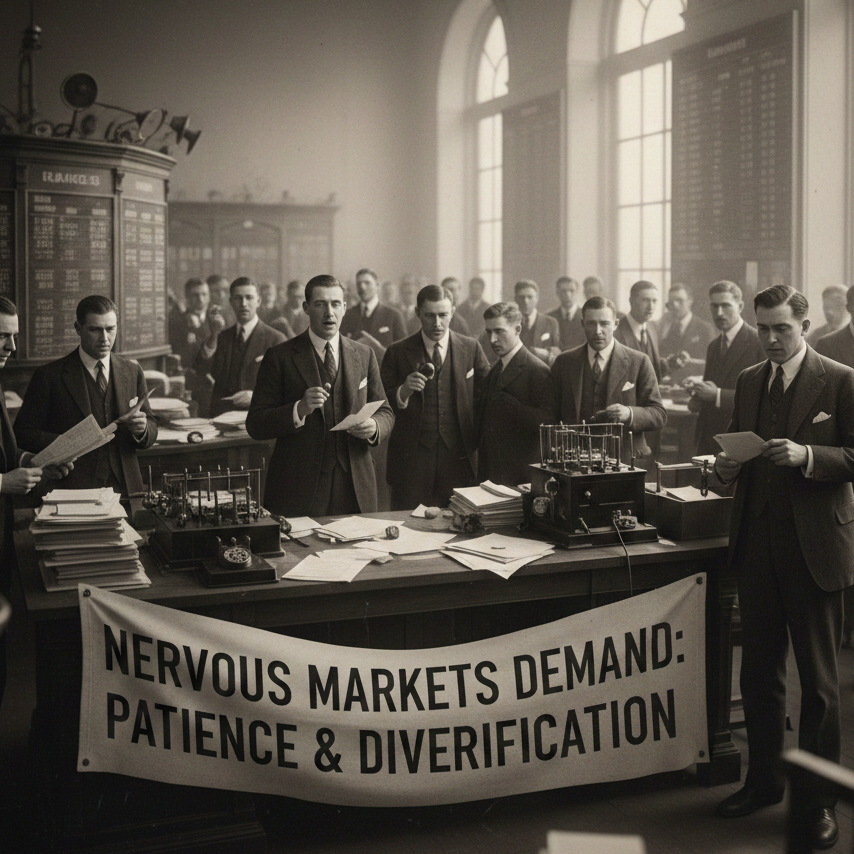
Markets do not panic for no reason. When volatility surges, correlations alter, and price action begins to dance in erratic patterns, it is rarely random noise. Instead, it is a direct manifestation of deep-seated systemic anxiety. Below the surface of daily price movements, the markets are currently flashing warning signs that most retail investors simply miss. While mainstream headlines scream and narratives twist constantly to explain the immediate cause of a move, the signals often appear long before the news even whispers of dread. Understanding these signals is the fundamental difference between being a reactive victim of volatility and a proactive navigator of global capital flows.
Nervous Markets Have a Unique Signature
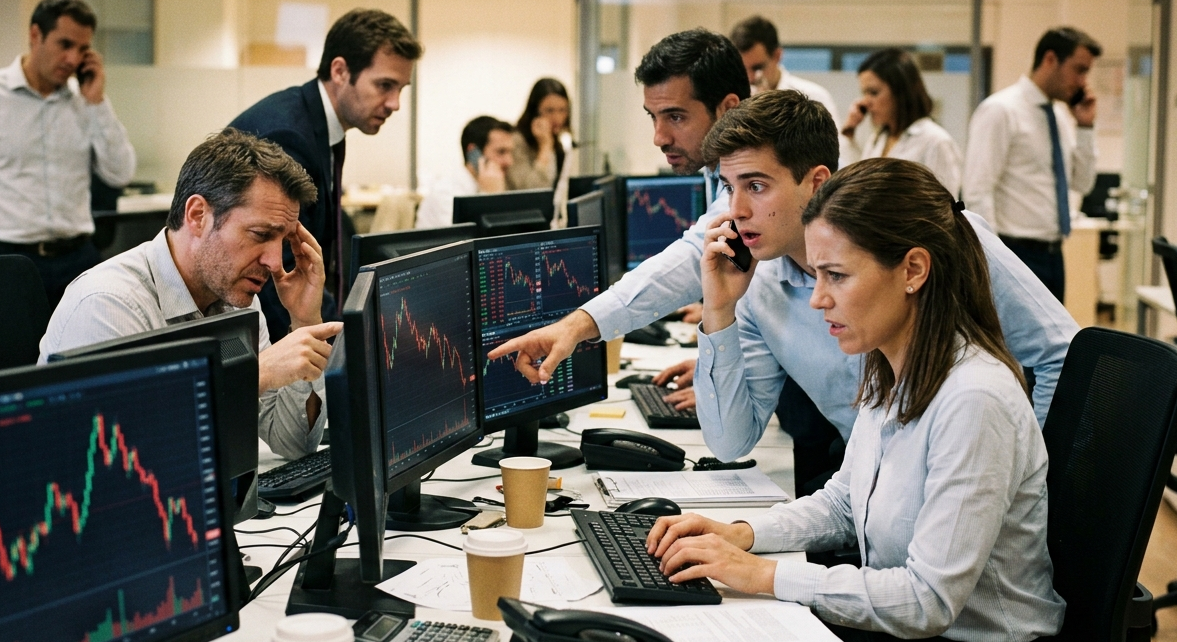
Market anxiety imprints itself quietly at first, often going unnoticed by the casual observer. In the early stages of a structural shift, the market seldom proclaims its intentions with a loud or dramatic crash. Instead, it manifests through delicate transitions and technical glitches in the status quo. You might see sudden spikes of volatility with no obvious fundamental cause, or safe-haven assets like Gold or Treasury bonds acting with more strength than the current narrative justifies.
Liquidity begins to weaken in unexpected corners, and long-standing asset correlations start to fray without warning. These events do not happen by chance; they are the earliest tremors of a structural shift in investor sentiment. Signals are not the full story on their own, but rather the essential data points that expose emerging trends. In 2026, these trends adjust themselves far faster than the news cycle can keep up, making real-time observation more critical than historical analysis.
Volatility is More Than Just Fear
Many participants equate volatility purely with fear, but in professional circles, volatility is primarily a measure of the unknown. A surge in the VIX or other volatility indices suggests that markets are frantically trying to price in risks that have not been fully identified yet. The options markets, in particular, offer a goldmine of insights for those who know where to look. Factors like skew, which represents the difference in cost between put and call options, and changes in open interest often shift days before a major price move occurs.
Sophisticated investors do not wait for a confirmed downturn to take action. They look at the implied volatility to hedge their positions early, ensuring they are protected before the crowd panics. When volatility starts to move independently of price, it is a clear clue that a significant event is being factored in by the smart money. This divergence is one of the most reliable indicators of a coming regime change in the markets.
The Selective Nature of Liquidity
One of the most telling signals of an uneasy market is the changing behavior of liquidity. During periods of calm, liquidity is generous and cheap, allowing you to move large amounts of capital without significantly moving the price of an asset. However, when anxiety takes hold, liquidity becomes incredibly picky. You will notice bid-ask spreads starting to widen even in supposedly liquid assets like large-cap stocks or major currency pairs.
Slippage becomes a recurring problem for traders, and certain assets begin moving vigorously on very low volume. This is not just a result of fear, but a sign of pure institutional caution. Liquidity does not simply vanish into thin air; it subtly withdraws to the sidelines as major players wait for clarity. When this happens, the market becomes fragile, and even a small trade can trigger a massive and disproportionate price swing that catches undisciplined traders off guard.
At Finanlytic, we don’t just monitor price; we monitor the structural integrity of the order book. To understand why markets become hyper-reactive, one must look at how institutional liquidity cycles actually operate during periods of high-gamma exposure. The following analysis breaks down the mechanics of these silent shifts, providing a visual confirmation of the signals we’ve discussed regarding institutional withdrawal and the widening of bid-ask spreads
When Correlations Start to Crack
Stressed markets are often heralded by a breakdown in traditional relationships between different asset classes. For years, we might see stocks and bonds moving in a specific coordinated dance, or a certain currency pair tracking the price of a commodity like oil. But when a system is under immense pressure, these unified assets begin to drift apart in unexpected ways.
Unexpected behavior emerges from safe havens, and the performance of risk-on assets turns erratic and unpredictable. These splits hint at internal conflicts among institutional players regarding the future direction of the economy. Broken correlations signify that the market no longer agrees on a unifying story or a common path forward. When there is no resolving narrative, the vacuum is filled by extreme volatility as the system searches for a new equilibrium.
Cross-Market Signals and the Crypto Gauge
In our highly interconnected era, unease seldom exists in a vacuum. Stocks, bonds, crypto, and commodities interact more than ever before through the pipes of global capital. If one sector feels the pressure, the contagion spreads quickly to others. Crypto, specifically, has evolved into a real-time sentiment gauge for global liquidity due to its 24/7 nature and its high sensitivity to the availability of excess cash.
Because crypto markets are always open, they often provide a leading signal for what risk appetite will look like in traditional markets the following Monday. If crypto volatility spikes while liquidity is tightening over a weekend, it is usually a precursor to a significant shift in the S&P 500 or the Nasdaq. Ignoring these cross-market signals is a dangerous oversight in a world where capital flows are increasingly fluid and borders mean less than they ever did.
The Hidden Danger of Overcrowded Positioning

Positioning is a signal that is frequently undervalued by the public but obsessed over by professionals. Market nerves typically spike when trades become overcrowded. When everyone is betting on the exact same outcome, the trade becomes inherently fragile and prone to a violent reversal. In a crowded trade, every participant is aware of the exit route, but no one wants to be the first to leave and trigger a slide.
This extreme positioning makes markets hyper-reactive to even minor news events. Any positive information that is slightly less substantial than expected can trigger a mass exodus as traders rush for the exit at the same time. Monitoring flows, funding rates in derivatives, and futures positioning can help you spot these crowded rooms before the fire alarm goes off. Being on the right side of a trade is only profitable if you are not the last person trying to leave.
Why the Headlines Are Always Late
By the time trepidation makes the front page of major financial news sites, the market move is usually well underway. This is the primary reason why reactive investors are consistently late to the party as they are chasing explanations rather than signals. Markets run on the future and complex probabilities, while news runs on facts and the past.
To succeed in 2026, you must prioritize the data of the now over the narrative of yesterday. This requires a mental shift from asking why something happened to asking what the current data suggests is happening at this exact moment. The narrative is almost always a post-hoc justification for a move that the data predicted days in advance.
How AI Processes the Noise of the Market
Artificial Intelligence has fundamentally changed the speed of signal detection. Modern AI systems do not ask why something is happening or care about the politics and drama surrounding an event. Instead, they focus purely on objective data points such as volatility regimes and their deviations from the mean. These systems analyze cross-asset correlations in real-time and detect microstructure changes in the order book that are invisible to human traders.
In nervous markets, objectivity and speed are the only things that truly matter. Algorithmic analysis excels in these conditions because it does not suffer from the paralysis of analysis that often affects human decision-makers. By the time a human trader has processed the implications of a news story, an AI system has already detected the shift in order flow and adjusted its exposure accordingly.
What Nervous Markets Demand from Investors
A jittery market punishes rigidity and rewards those who are willing to adapt. It celebrates the investor who understands that adaptability trumps unwavering belief in a single outcome. In these times, risk control is significantly more valuable than foresight or the ability to predict the future.
This does not mean you should discard your long-term plan every time the VIX spikes or the market has a red day. It means your plan must be dynamic and capable of evolving with the changing internal mechanics of the market. It is not about guessing what happens next, but about keeping pace with the data as it flows through the system.
Finanlytic Takeaway

FINANLYTIC | DATA INTELLIGENCE UNIT | Analysis by Hugo | Lead Market Strategist
The most dangerous moment in a market is not the pinnacle of fear, but rather the early stage of uncertainty. This is when complacency still persists among the majority, signals are flashing red in the background, but the official story has not broken yet. Markets fail due to internal misalignment and a breakdown of liquidity, never during periods of clear weather.
If you want to protect your capital and find opportunities in 2026, you must listen to the whispers of the market now. Failing to do so means you will eventually be forced to hear its screams when the volatility reaches a fever pitch. At Finanlytic, we focus on providing the clarity you need to hear those whispers before they turn into a roar.